
US Shipping Guide for Shopify Sellers Before Holiday Season
US Shipping Guide for Shopify Sellers Before Holiday Season
The holiday season is one of the most important sales periods for Shopify and independent ecommerce stores.
Black Friday, Cyber Monday, Christmas, and other Q4 promotions can bring a significant increase in orders. But higher sales also mean greater pressure on inventory, fulfillment, shipping capacity, and customer service.
For US Shopify sellers, one of the biggest risks is waiting too long to prepare shipping.
A product can sell successfully, but if it arrives after the customer's expected delivery date, the seller may face:
Refund requests | Negative reviews | Customer complaints | Higher support costs | Lost repeat purchases
This is why holiday preparation should include more than inventory planning.
Your US shipping strategy needs to be ready before your orders peak.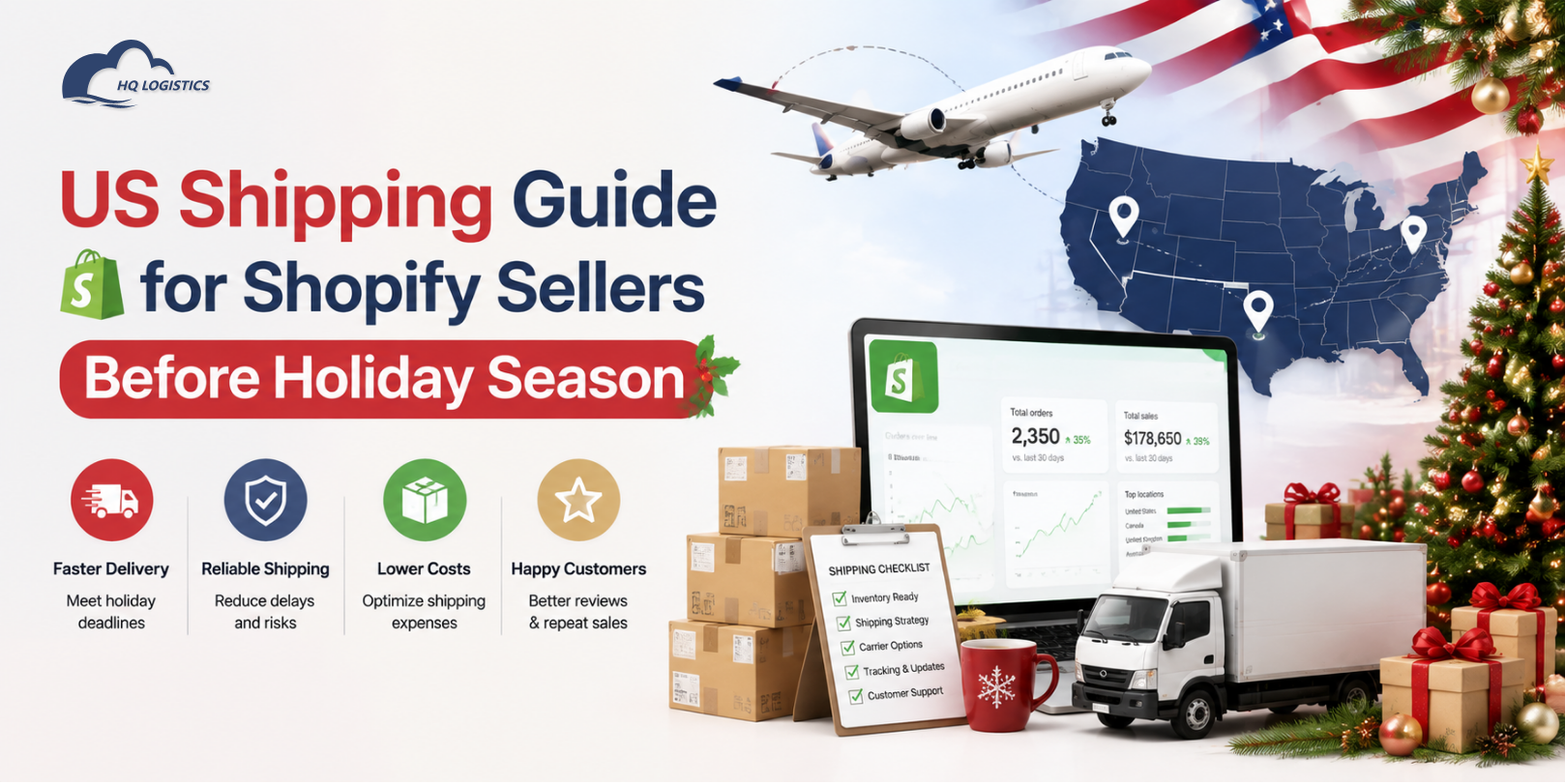
Why US Shipping Planning Matters Before the Holidays
During Q4, shipping networks become significantly busier.
Shopify sellers may experience:
Higher shipping costs | Longer carrier processing times | Limited transportation capacity | Increased warehouse workload | More customer inquiries | Higher return volumes
For brands shipping internationally to the United States, customs clearance adds another layer of risk.
A reliable holiday shipping strategy should therefore balance:
Delivery Speed + Shipping Cost + Customs Compliance + Tracking + Returns
Don't Wait Until Black Friday to Choose Your Shipping Channel
One of the most common mistakes sellers make is selecting a shipping channel only after sales start increasing.
By that time, the seller may already have:
Large numbers of pending orders | Limited shipping options | Higher transportation costs | Insufficient warehouse capacity
Instead, Shopify sellers should evaluate their shipping channels before the holiday season.
Consider:
Delivery Time
How long does the service normally take?
Product Restrictions
Can the channel accept your products?
Shipping Cost
How is chargeable weight calculated?
Tracking
Can customers track their packages?
Returns
What happens if delivery fails?
Compensation
What happens if a package is lost?
These factors can have a major impact on your actual holiday fulfillment cost.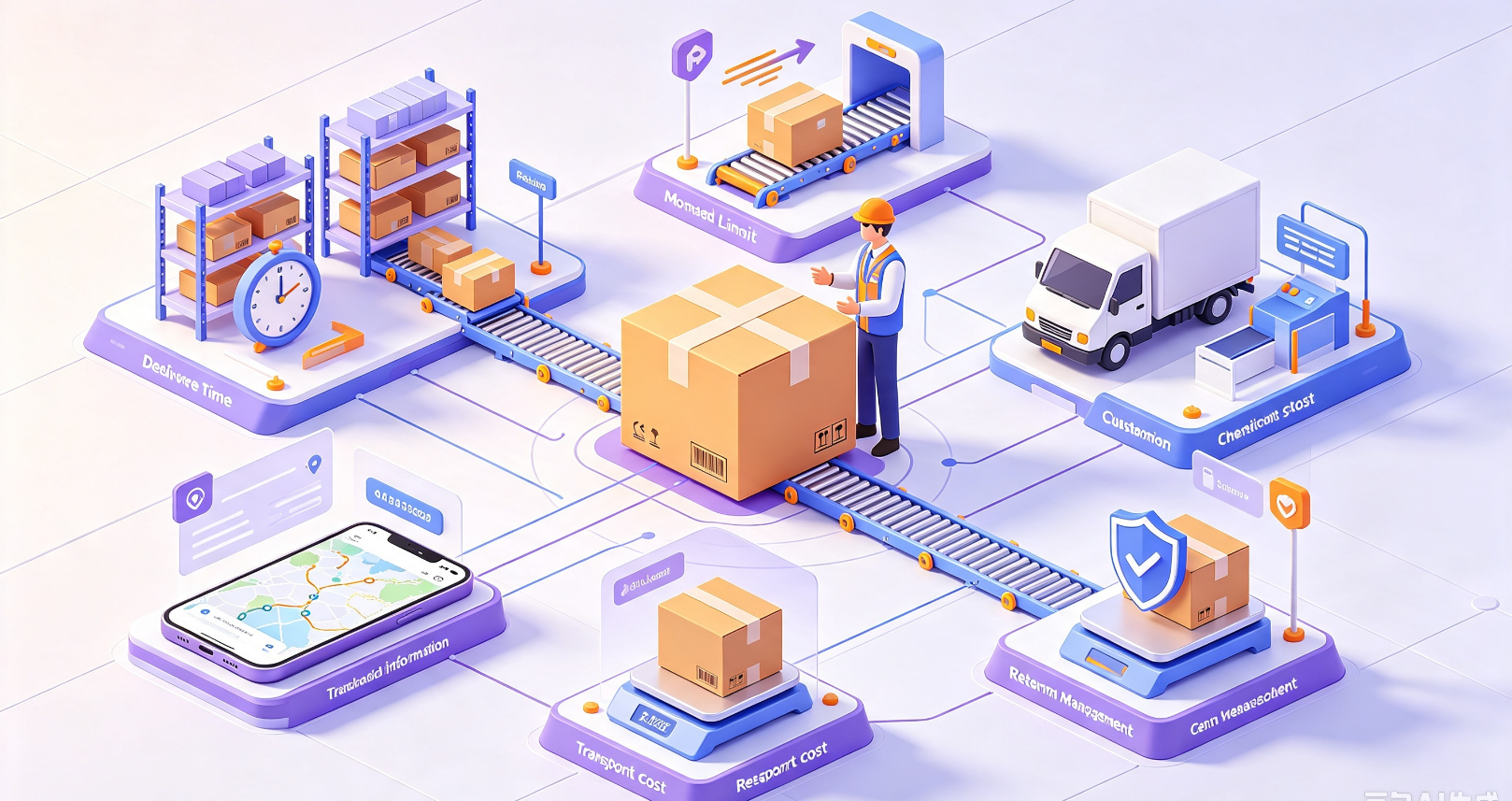
US Shipping Time for Holiday Orders
Holiday shoppers are highly time-sensitive.
A customer purchasing a Christmas gift does not simply want the product to arrive eventually.
They need it to arrive before Christmas.
For this reason, sellers should not rely only on the average delivery time.
Instead, evaluate:
Average transit time | Maximum expected transit time | Warehouse processing time | Customs clearance time | Final-mile delivery time
For international shipments, building a reasonable buffer before major holidays is essential.
How US Shipping Costs Are Calculated
Shipping costs are generally based on chargeable weight.
The chargeable weight is the higher of:
Actual Weight vs. Volumetric Weight
Volumetric weight is calculated using:
L × W × H ÷ 8000
This means packaging can directly affect shipping costs.
For example, a lightweight product packed in an oversized box may have a high volumetric weight.
For holiday products, sellers should therefore review packaging before Q4 volume increases.
US Minimum Chargeable Weight
For the US shipping service covered by the current channel rules, the minimum chargeable weight is:
0.05 KG
The package is charged according to the applicable chargeable weight after comparing actual and volumetric weight.
This is particularly relevant for Shopify sellers selling small, lightweight products.
Even small differences in packaging size can affect the final logistics cost when order volume reaches hundreds or thousands of parcels.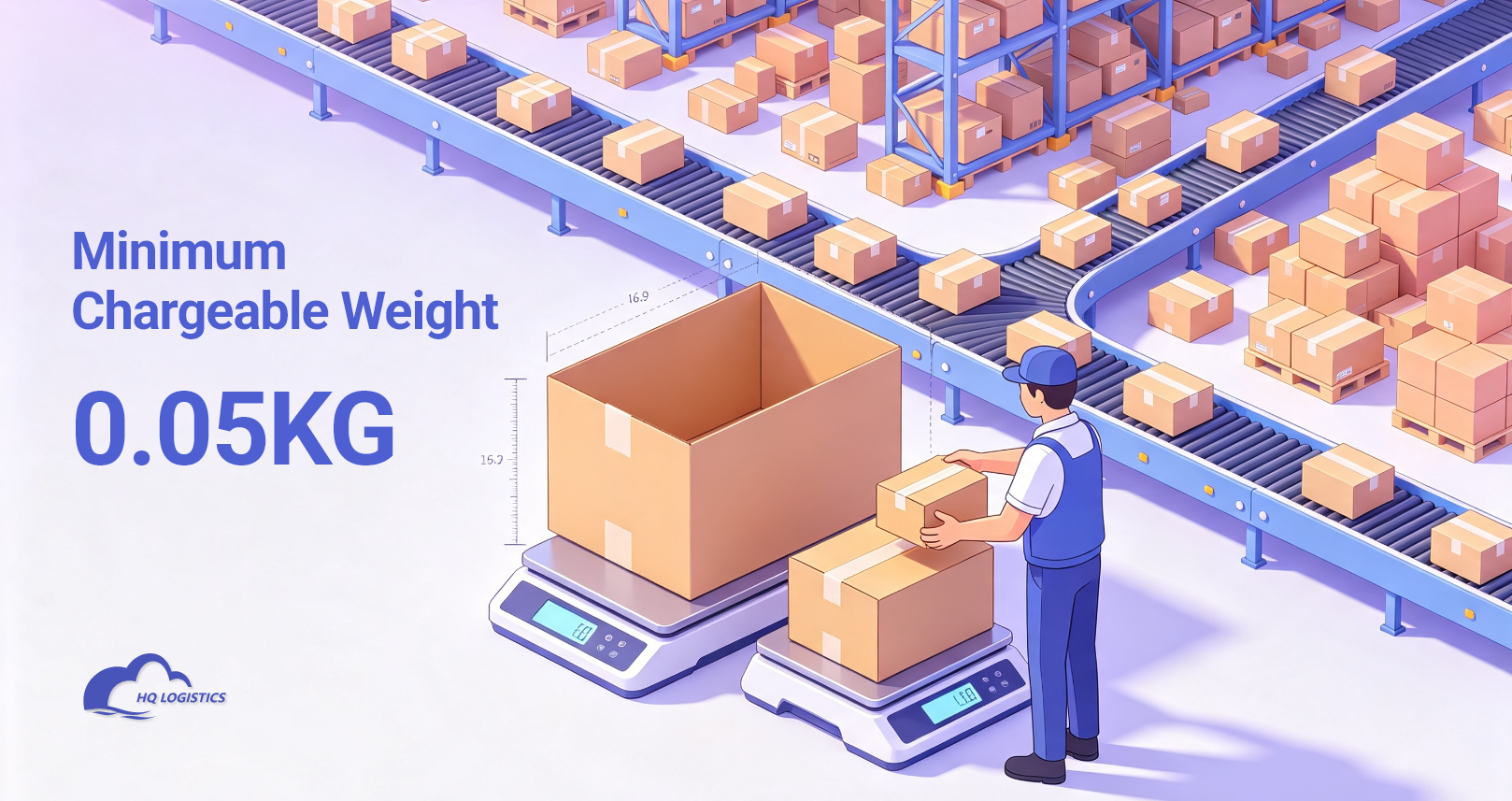
US Parcel Size Requirements
For standard US shipments, the parcel size limit is:
≤ 55 × 40 × 35 cm
An extended size option may be available for an additional fee:
≤ 68 × 43 × 43 cm
This is important for sellers of:
Home products | Seasonal decorations | Larger toys | Gift sets | Clothing bundles
Before launching a holiday campaign, sellers should confirm whether their packaging fits the shipping channel.
Product Restrictions for US Shipments
Not every product can use a standard US shipping channel.
The current US channel accepts general cargo products but does not accept certain categories, including:
FDA-regulated products | Cosmetics | Adult products | Branded or trademark-infringing products
This is especially important for Shopify sellers.
A product may be legal to sell on a Shopify store but still be unsuitable for a specific transportation channel.
For example, beauty brands selling skincare or cosmetics should not automatically assume that a standard general cargo channel can be used.
They may need a specialized sensitive-goods shipping solution.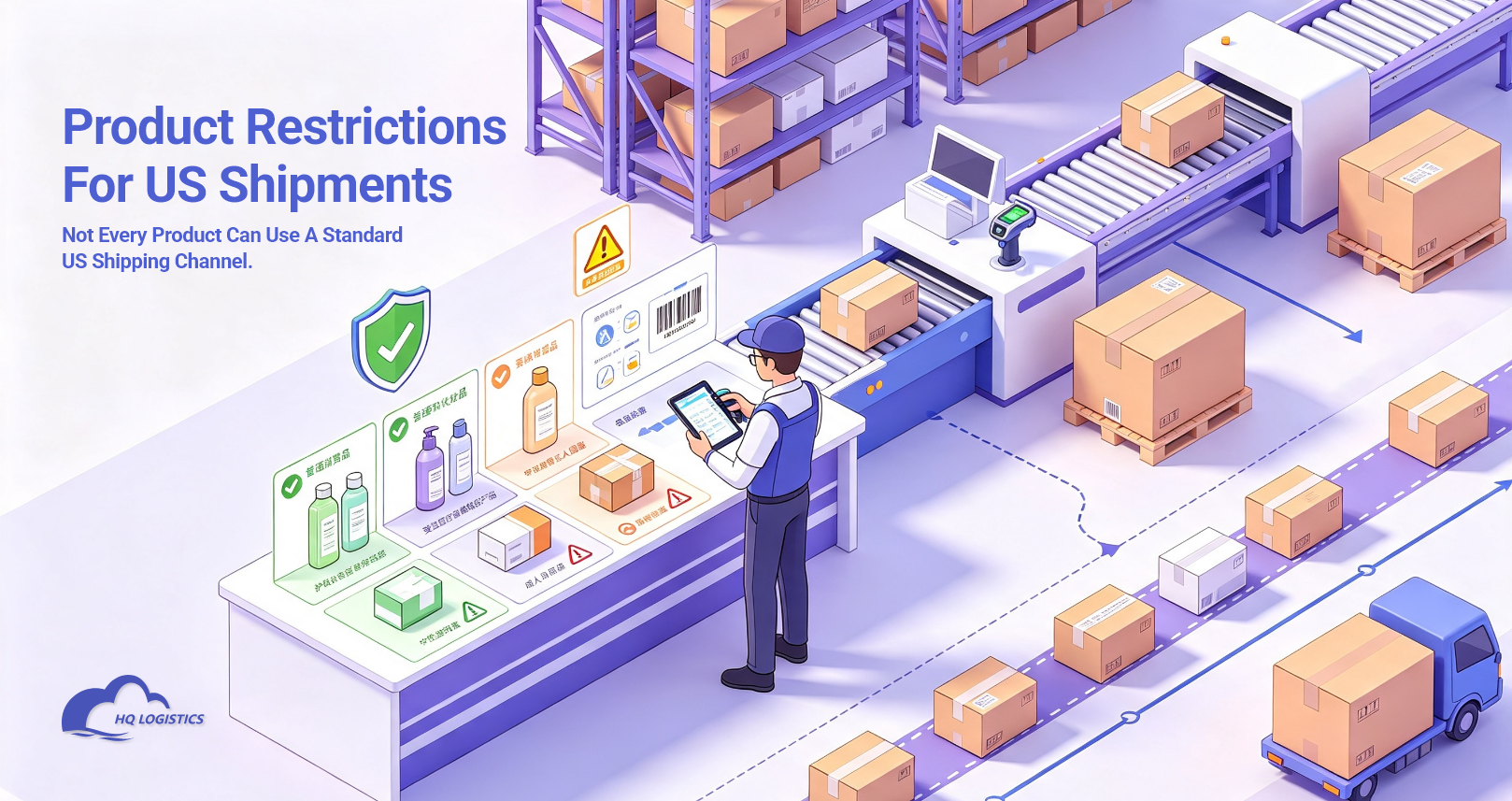
Branded Products and Intellectual Property
The shipping rules also prohibit products involving:
Unauthorized brands | Trademarks | Logos | Copyrighted designs | International cartoon characters | Other intellectual-property-infringing products
This is especially relevant during Halloween and Christmas, when many seasonal products feature famous characters and branded designs.
Shopify sellers should check products before placing them into holiday inventory.
US Customs Declaration Requirements
Customs declarations are one of the most important parts of international shipping.
For the US channel, the declared value of a single parcel must not exceed:
US$60
More importantly, sellers should provide accurate and specific product information.
A vague description such as:
“Clothes”
may create unnecessary customs questions.
A more specific description would be:
“Women's polyester shirt”
The product description should accurately identify the product, its use, and its material.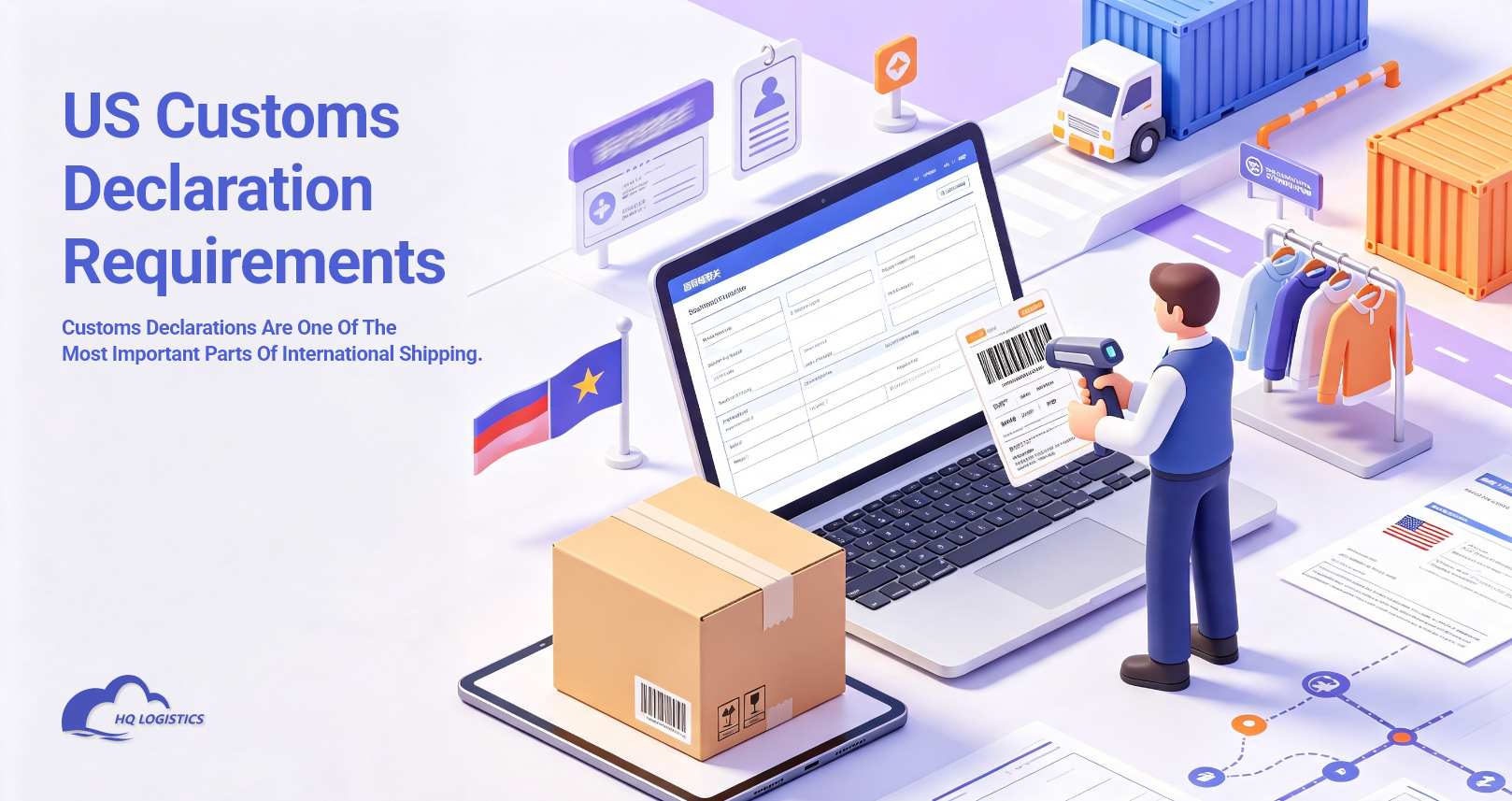
Why Accurate Declarations Matter During Q4
Holiday season creates additional pressure on customs and logistics networks.
If a shipment contains:
Incorrect product information | Inaccurate declared value | Incomplete recipient information | Suspiciously low declared value
customs may request additional information or reassess the shipment.
This can result in:
Delays | Additional taxes | Penalties | Additional logistics costs | Customer complaints
For Shopify sellers, accurate declarations are therefore part of holiday fulfillment planning.
Do Not Use Vague Product Categories
The declared product name should be specific.
Avoid descriptions such as:
Electronic accessories | Parts | Accessories | Clothing | Household items
Instead, provide a more accurate product description.
For example:
Women's polyester shirt
is more useful than:
Clothing
This improves transparency and can help reduce unnecessary customs questions.
Recipient Information Matters
The recipient's name should include both:
First Name + Last Name
rather than only a single name.
The delivery address should also be complete and accurate.
Incorrect addresses can lead to failed delivery attempts and additional handling.
During Q4, when carrier networks are already busy, address errors can make delivery even more difficult.
Same Customer, Same Address, Multiple Packages
Shopify sellers should also pay attention to multiple packages sent to the same recipient and address on the same day.
Declared values may be accumulated.
Therefore, sellers should not assume that splitting one order into several packages automatically avoids the destination's declaration threshold.
This is particularly important for large holiday orders.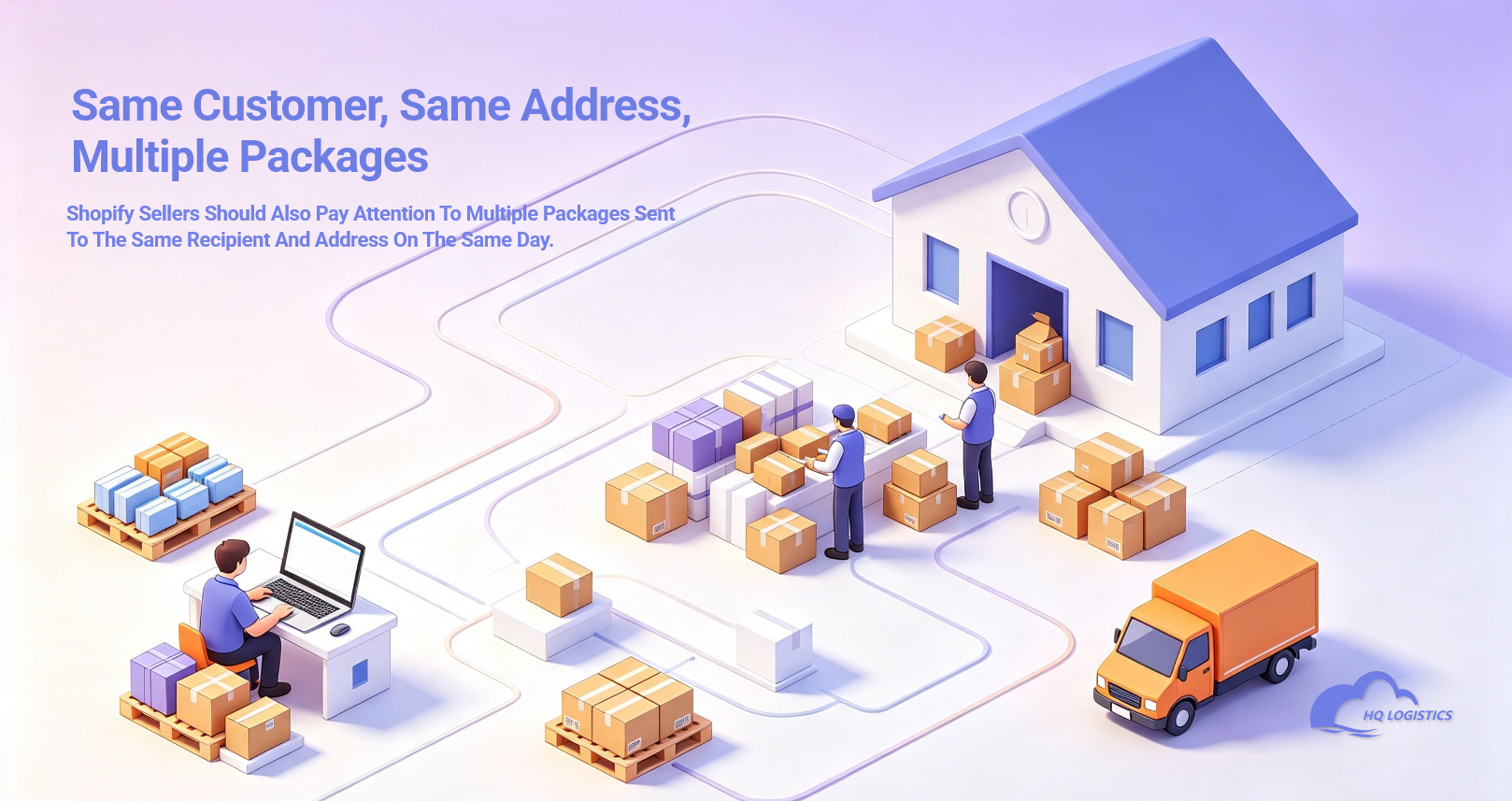
Tracking Is Essential During Holiday Season
Customers are more likely to contact support when they cannot see shipment progress.
For US shipments, the final-mile service provider is:
USPS
The shipping process returns a USPS tracking number that can be used to follow the package.
For Shopify sellers, tracking information should be synchronized with the store as quickly as possible.
This allows customers to see:
Shipment status | Carrier updates | Delivery progress | Final delivery confirmation
Reliable tracking can significantly reduce “Where is my order?” support tickets during Q4.
What If the Package Cannot Be Delivered?
Holiday shipping also requires a clear reshipment strategy.
For the US service covered by the current rules, packages returned to the overseas warehouse may qualify for reshipment.
Customers generally have:
14 days
after the parcel is returned to choose reshipment.
The standard reshipment fee is:
RMB 50 per parcel
If the customer does not request reshipment within the applicable period, the parcel may be destroyed.
For Shopify sellers, understanding this process before Q4 can prevent confusion when delivery problems occur.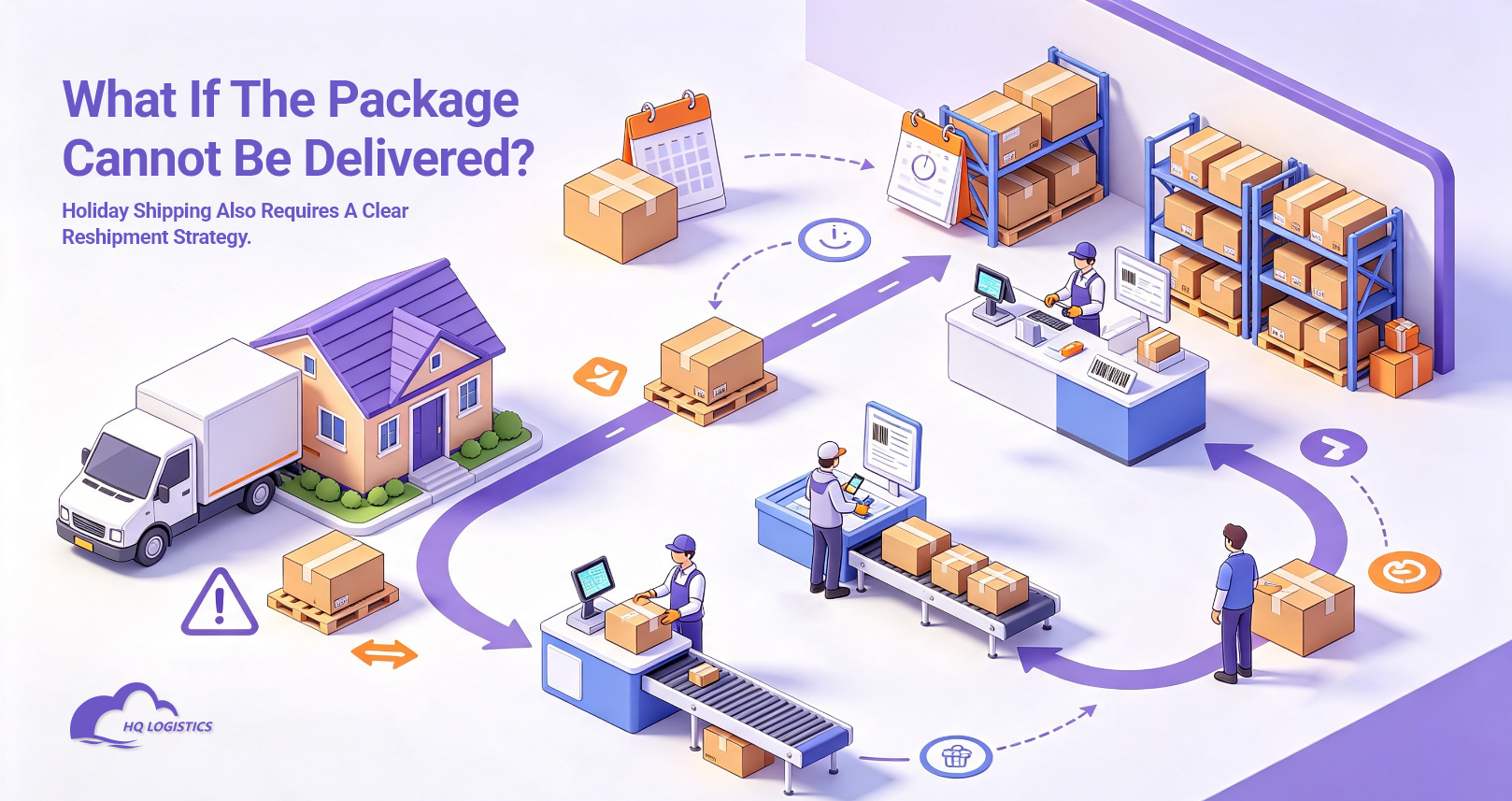
Why Holiday Returns Need to Be Planned Early
Returns can increase during Q4.
Common reasons include:
Incorrect address | Customer unavailable | Failed delivery | Customer changes their mind | Product-related issues
A seller should know in advance:
Who handles the return? | Where does the package go? | Can it be reshipped? | How much does reshipment cost? | How long will the package be stored?
Without clear answers, a small delivery issue can quickly become an expensive customer-service problem.
US Holiday Shipping: What Shopify Sellers Should Prepare
Before Black Friday, sellers should review the following.
1. Inventory
Make sure best-selling SKUs are sufficiently stocked.
2. Packaging
Optimize package dimensions to control volumetric weight.
3. Shipping Channel
Confirm product eligibility and expected delivery time.
4. Customs Information
Prepare accurate product names, materials, and declared values.
5. Customer Information
Make sure names, addresses, and contact details are complete.
6. Tracking
Confirm that tracking numbers can be synchronized with Shopify.
7. Reshipment
Understand the process and associated costs.
8. Customer Support
Prepare responses for delayed, returned, or abnormal shipments.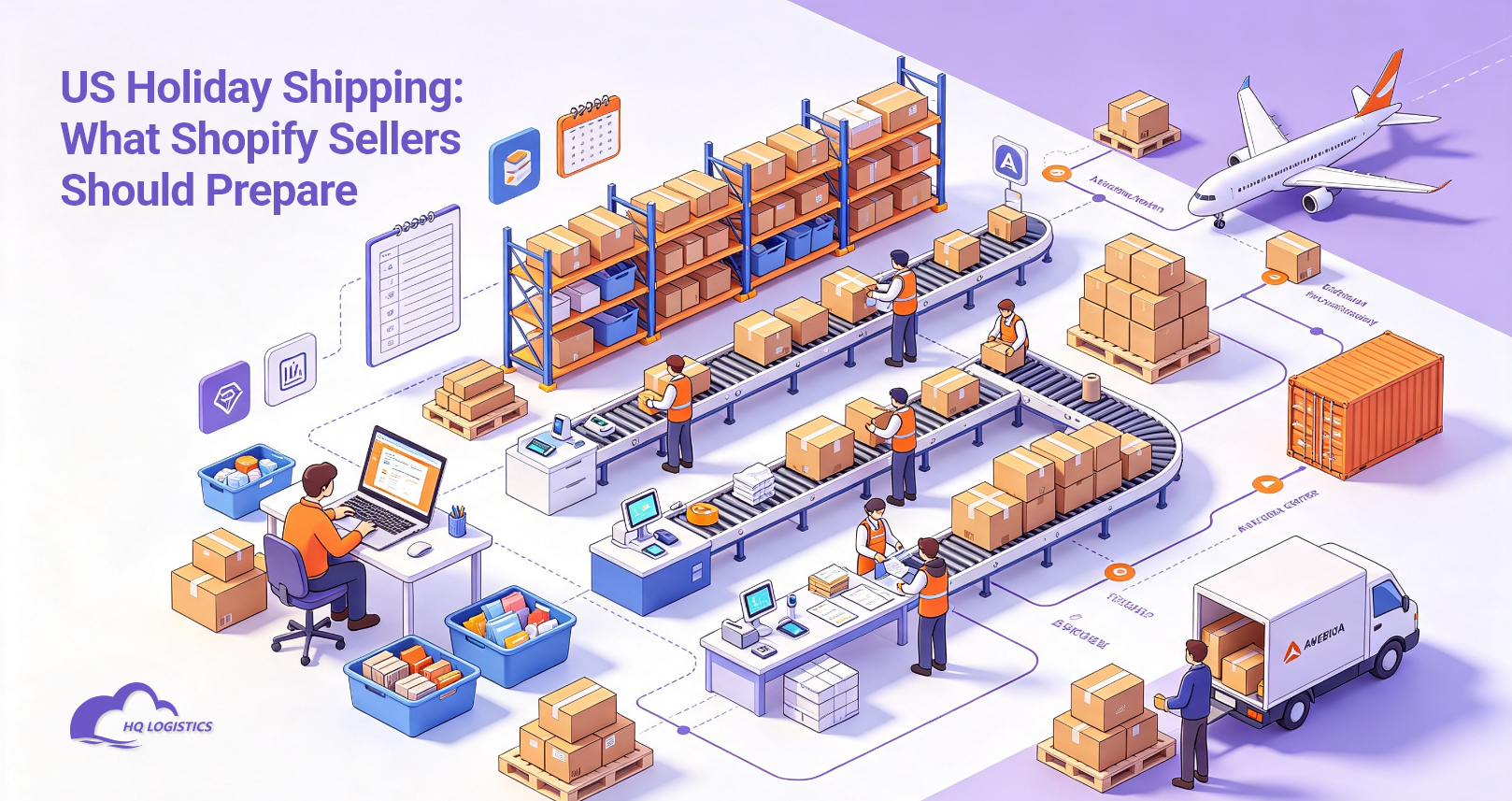
How 3PL Fulfillment Can Help During Q4
A third-party logistics partner can take over much of the operational workload.
A professional 3PL can coordinate:
Inventory → Picking → Packing → Quality Control → Shipping → Tracking → Returns
This is particularly valuable when order volumes increase rapidly during:
Black Friday | Cyber Monday | Christmas | New Year promotions
Instead of manually managing every shipment, Shopify sellers can focus on sales and marketing.
Why Inventory and Fulfillment Need to Work Together
Shipping performance starts before the parcel leaves the warehouse.
If inventory is not ready, fast shipping cannot solve the problem.
For example:
Customer places order → Product unavailable → Supplier replenishment → Warehouse receives product → Order shipped
Even a fast shipping channel cannot compensate for inventory shortages.
This is why holiday fulfillment should begin with inventory planning.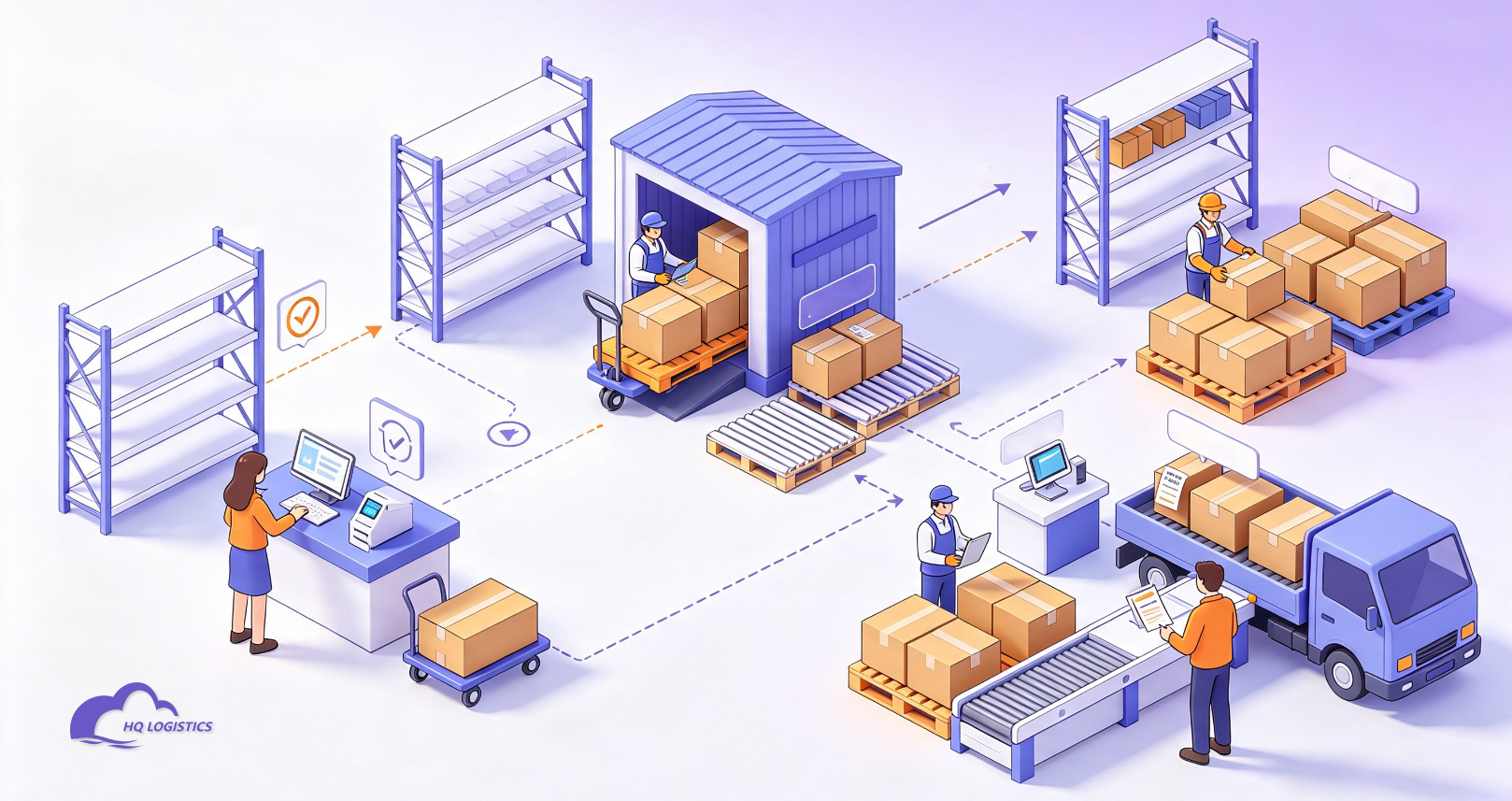
How HQ LOGISTICS Supports US Shopify Sellers
HQ LOGISTICS provides an integrated supply chain solution for Shopify and independent ecommerce brands.
Lower Sourcing Costs
We support competitive product sourcing through supplier networks and factory-direct sourcing.
This helps sellers improve product margins before logistics costs are added.
Flexible Fulfillment Solutions
Different products and markets require different logistics strategies.
We help sellers select solutions based on:
Product type | Destination | Delivery requirements | Order volume | Cost targets
Reliable Supplier Network
Stable suppliers help reduce:
Stockouts | Production delays | Replenishment problems
This is especially important before Q4.
100+ Global Shipping Channels
Instead of relying on one route, HQ LOGISTICS can compare multiple shipping channels based on:
Cost + Speed + Destination + Product Type
This gives sellers more flexibility during peak season.
Specialized Sensitive Goods Shipping
Beauty products, perfume, supplements, liquids, powders, electronics, and other sensitive products may require specialized shipping channels.
HQ LOGISTICS helps sellers identify suitable solutions instead of forcing every product through the same general cargo route.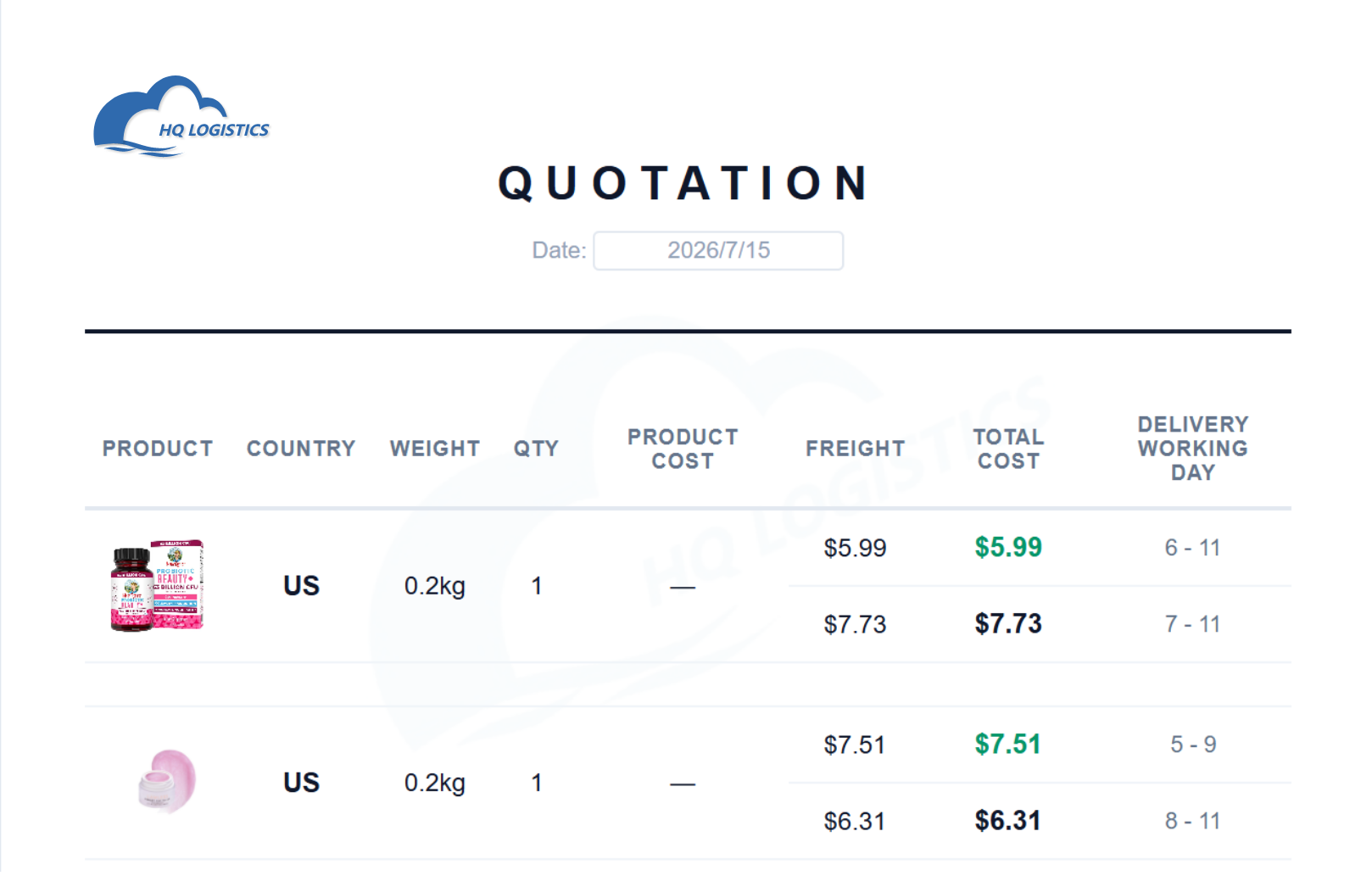
Sample Inspection & Quality Control
Before scaling a product for Q4, sellers can inspect samples and verify:
Product quality | Product specifications | Packaging | Appearance | Quantity
Quality checks before shipment can help reduce costly customer complaints and returns.
Transparent Pricing
Shipping costs should be predictable.
HQ LOGISTICS provides clear quotations and explains applicable pricing rules, including chargeable weight and reshipment costs.
This helps sellers calculate their actual landed logistics cost more accurately.
Real-Time Tracking
Shipment tracking provides visibility from dispatch to final delivery.
This helps:
Sellers monitor orders | Customer service teams respond faster | Customers track their packages
Dedicated Account Manager
Growing Shopify brands can receive personalized support for:
Order issues | Shipping questions | Abnormal shipments | Fulfillment coordination | Logistics planning
A Simple Q4 US Shipping Strategy
For Shopify sellers preparing for the holiday season, a practical strategy is:
August–September
Identify best-selling products | Forecast Q4 demand | Test shipping channels | Inspect samples | Confirm supplier capacity
September–October
Build inventory | Optimize packaging | Confirm shipping routes | Prepare customs information | Test tracking synchronization
October–November
Move inventory into fulfillment | Monitor shipping capacity | Launch early holiday campaigns | Reserve appropriate shipping channels
Black Friday–Christmas
Monitor inventory daily | Track abnormal shipments | Communicate delivery expectations | Prioritize high-value and time-sensitive orders
The earlier sellers prepare, the more options they have.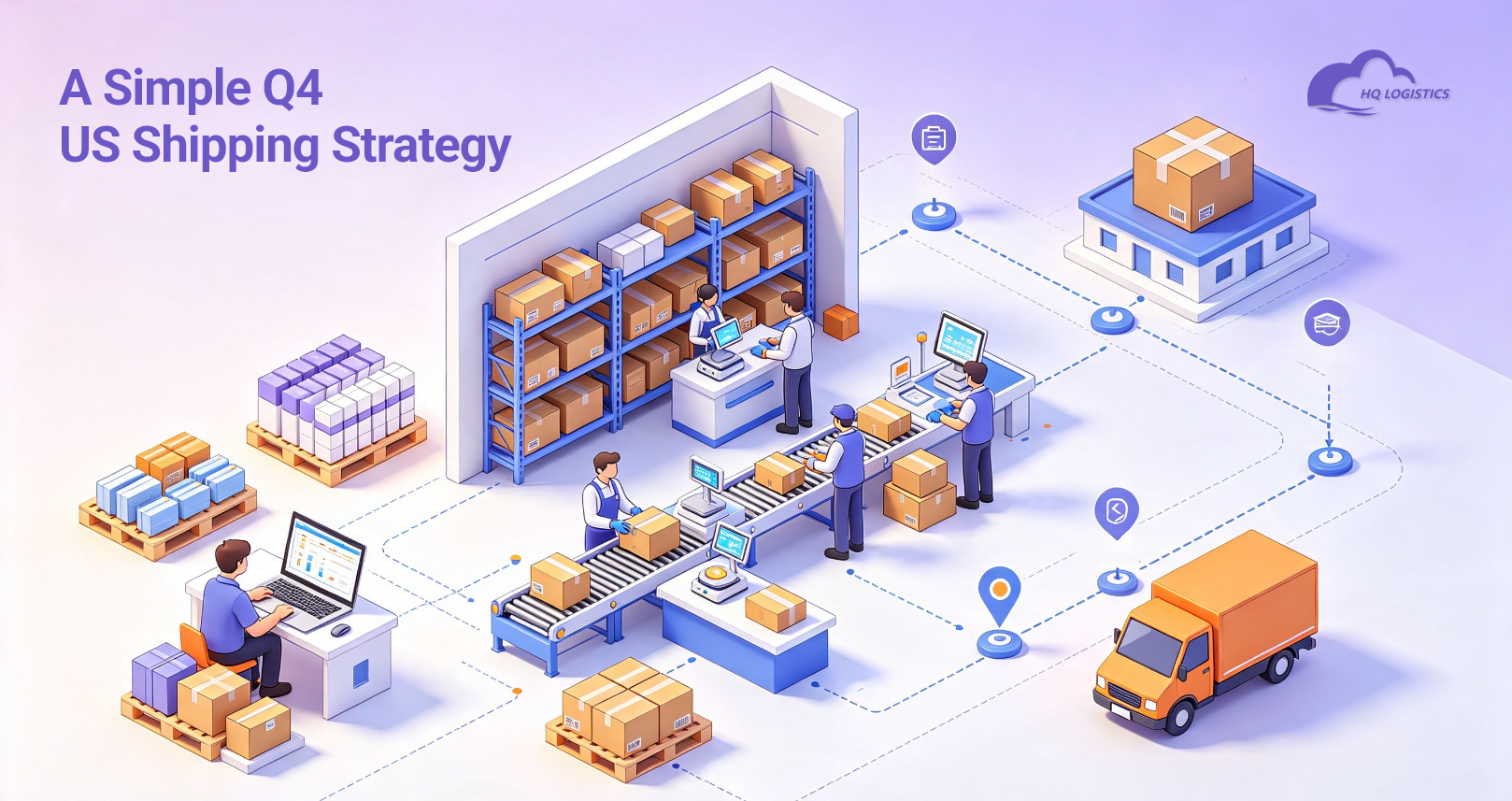
US Holiday Shipping Checklist
Before launching your Q4 campaign, ask:
☑ Is my inventory ready?
☑ Is my packaging optimized?
☑ Does my product qualify for the selected shipping channel?
☑ Is my declared product information accurate?
☑ Is my declared value within the applicable limit?
☑ Can customers track their orders?
☑ Do I have a reshipment process?
☑ Do I understand the compensation rules?
☑ Is my 3PL ready for higher order volumes?
☑ Do I have a backup shipping channel?
If the answer to any of these questions is “no,” your holiday fulfillment strategy may not be ready yet.
FAQ
What is the best shipping strategy for Shopify sellers before the holiday season?
Start early, forecast inventory, test shipping channels, optimize packaging, and choose routes based on speed, cost, product eligibility, and tracking.
How is US shipping weight calculated?
Chargeable weight is based on the higher of actual weight and volumetric weight. Volumetric weight is calculated using L × W × H ÷ 8000.
What is the US parcel size limit?
The standard size limit for the referenced US channel is 55 × 40 × 35 cm. An extended size option may be available with an additional fee.
What products cannot use the standard US channel?
The referenced channel accepts general cargo but does not accept FDA-related products, cosmetics, adult products, branded products, or intellectual-property-infringing goods.
What is the US declared value limit?
The declared value for a single parcel must not exceed US$60 under the referenced channel rules.
What carrier provides final-mile delivery?
The referenced US service uses USPS for final-mile delivery and returns a USPS tracking number.
Can returned US packages be reshipped?
Eligible returned packages can generally be reshipped within the specified 14-day period, subject to the applicable reshipment fee and channel rules.
Why should Shopify sellers work with a 3PL during Q4?
A 3PL can help coordinate inventory, fulfillment, quality control, shipping, tracking, and returns, allowing sellers to handle higher order volumes without significantly increasing operational workload.
But more orders also mean more pressure on fulfillment and logistics.
For US sellers, successful holiday shipping requires more than finding a cheap shipping rate.
Inventory + Packaging + Customs + Shipping + Tracking + Returns
The most successful Shopify sellers don't wait until Black Friday to solve logistics problems.
Holiday sales start with marketing.
But holiday customer satisfaction starts with fulfillment.