Your Store Is Growing. Is Your CJ Fulfillment Partner Keeping Up?
Your Store Is Growing. Is Your CJ Fulfillment Partner Keeping Up?
Your Shopify store is growing.
Orders are coming in faster. Your best-selling products are becoming more predictable. You are spending more on ads, launching new products, and thinking seriously about building a long-term brand.
That is great news.
But growth also changes what you need from your fulfillment partner.
A fulfillment solution that worked perfectly when you were processing a few orders a day may become less flexible when you are handling hundreds or thousands of orders.
For many Shopify sellers, CJ Dropshipping is a convenient way to get started with product sourcing, dropshipping, order fulfillment, and shipping. CJ offers sourcing, warehouse services, Shopify integration, custom packaging, and global fulfillment options.
The real question is not whether CJ is a good fulfillment option.
The question is:
Is your current fulfillment setup still the right fit for the next stage of your business?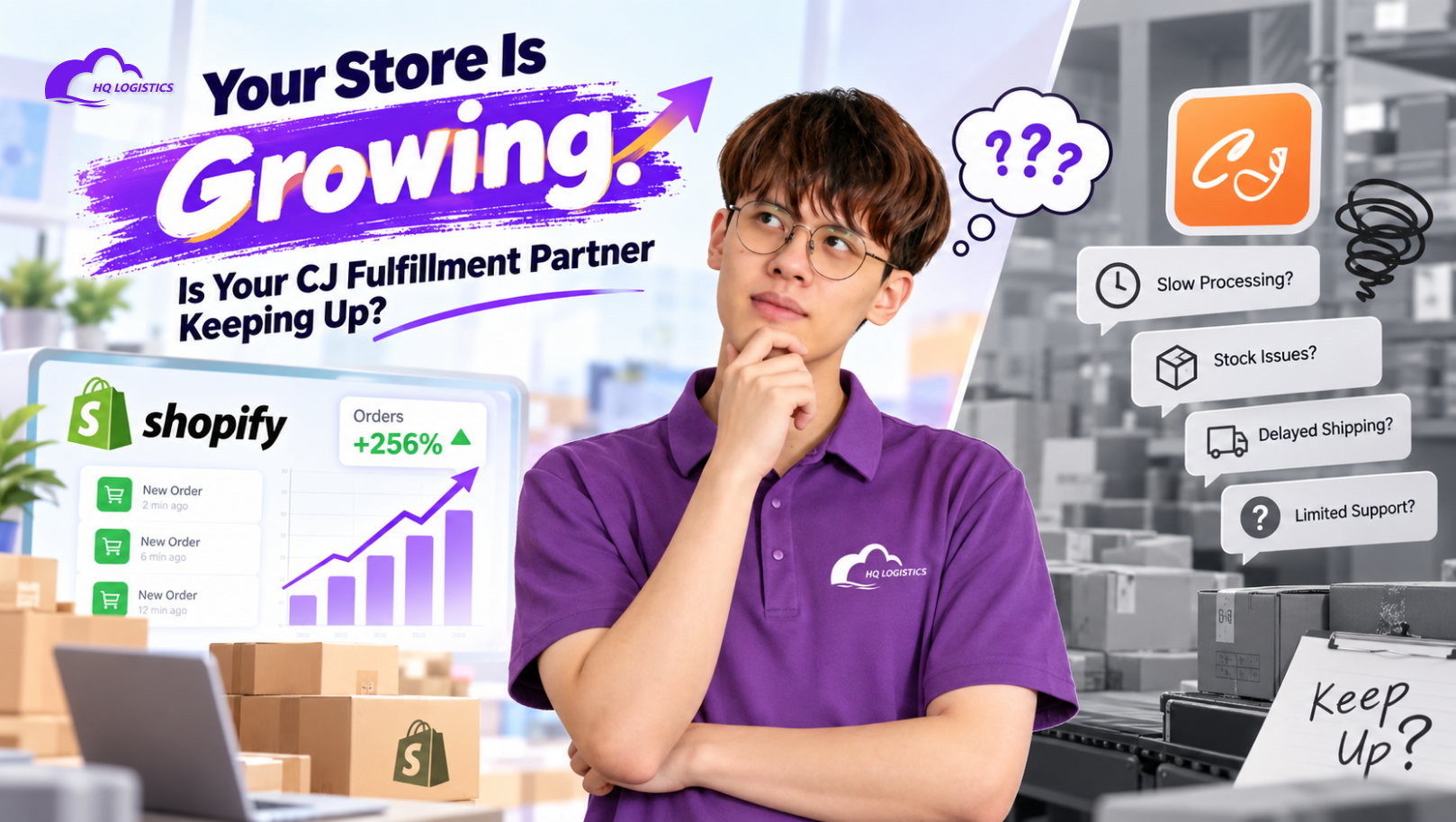
When CJ Fulfillment Makes Sense
CJ can be a practical starting point for new and growing Shopify stores.
Its platform connects product sourcing, order processing, warehousing, shipping, and store integration in one ecosystem. Sellers can also use custom packaging and global warehouse services as their businesses develop.
For a store that is still testing products, this can reduce the complexity of managing multiple suppliers.
You can: Test products without building your own supply chain | Source products through one platform | Connect your Shopify store | Automate order fulfillment | Access warehouse inventory | Add custom packaging | Choose different shipping solutions
For many beginners, that simplicity is exactly what they need.
But as your store grows, simplicity is no longer the only priority.
You start asking different questions.
Can my supplier support larger order volumes?
Can I negotiate better product costs?
Can I maintain consistent product quality?
Can I customize products instead of just packaging?
Can I position inventory closer to customers?
Can I get more proactive supply chain support?
That's where the conversation changes.
1. More Orders Require More Than Automated Fulfillment
When you are processing 10 or 20 orders a day, manual communication may not feel like a problem.
At 500 orders a day, it can become a serious operational issue.
As order volume increases, small inefficiencies multiply:
More orders → More SKUs → More inventory → More suppliers → More customer expectations
Your fulfillment partner now needs to handle more than simply receiving an order and shipping a package.
You need: Faster order processing | Accurate inventory data | Stable warehouse operations | Reliable tracking updates | Scalable packing capacity | Clear exception handling | Better communication during peak periods
Shopify recommends that growing merchants regularly share updated sales forecasts with their fulfillment providers, especially during peak seasons, so inventory and fulfillment resources can be prepared in advance.
Your fulfillment partner should therefore become part of your growth planning, not just your shipping process.
2. Product Sourcing Becomes More Important as You Scale
When you are dropshipping, product sourcing is often about finding something that sells.
Once you have a winning product, the goal changes.
Now you want to improve:
Cost + Quality + Availability + Customization + Brand Value
A product that generates 50 orders a month may not have the same requirements when it generates 5,000 orders a month.
You may need: Better factory pricing | Stable supplier relationships | Consistent product specifications | Quality inspections | Private labeling | Custom packaging | Product modifications | Exclusive product development
At this stage, you are no longer simply looking for a dropshipping supplier.
You are building a supply chain.
That is a major difference.
3. Your Brand Needs More Than Generic Packaging
Dropshipping is often associated with generic products and generic packaging.
That can work during the testing stage.
But successful Shopify brands usually want customers to remember the brand—not the supplier.
That means your fulfillment partner needs to support branding.
Think about: Custom boxes | Branded mailers | Thank-you cards | Product inserts | Custom labels | Private labeling | Branded tape | Customized product packaging
CJ already offers custom packaging options, including logos, stickers, cards, and bags.
But as your brand develops, you may need a deeper level of customization that connects sourcing, production, packaging, and fulfillment together.
The goal is no longer simply:
“Can you ship my order?”
It becomes:
“Can you help me build my brand?”
4. Inventory Becomes a Growth Problem
Dropshipping sounds simple because you do not need to hold large amounts of inventory yourself.
But once a product becomes a proven winner, inventory planning becomes increasingly important.
Running out of stock during a successful campaign can be extremely expensive.
You lose: Sales | Ad momentum | Customer trust | Ranking opportunities | Repeat purchases
At the same time, buying too much inventory can create cash-flow pressure and dead stock.
Shopify recommends using sales data, seasonality, safety stock, and reorder points to reduce the risk of both stockouts and excess inventory.
A stronger fulfillment partner should help you answer:
How much should we stock?
When should we reorder?
Where should we store it?
When should inventory move to an overseas warehouse?
How much safety stock do we need before Black Friday?
These are supply chain questions—not just fulfillment questions.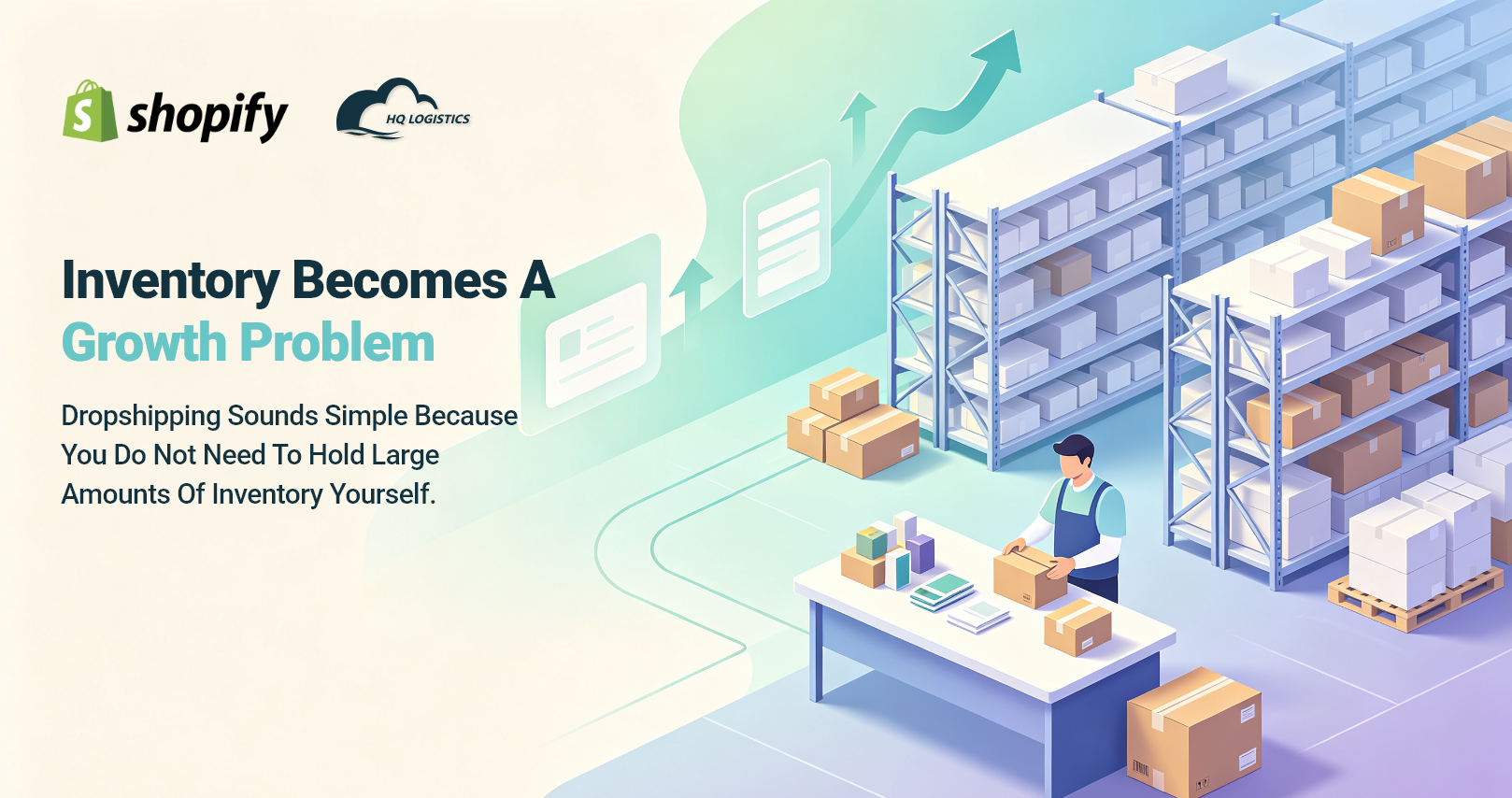
5. Global Sales Require Smarter Inventory Positioning
Your customers may be in the US, UK, Germany, France, Australia, Canada, or dozens of other markets.
Shipping every order from China can work when your volume is low.
But as sales grow, you may want to position inventory closer to your customers.
For example:
China → Product sourcing and replenishment
US Warehouse → US customer fulfillment
EU Warehouse → European customer fulfillment
This can help reduce delivery times and create a better customer experience.
CJ itself offers fulfillment through warehouses in China, the US, Europe, and other locations.
The important question is not simply whether your partner has warehouses.
It is whether your partner can help you determine where inventory should be placed based on your actual sales distribution.
That becomes increasingly important as your Shopify store expands internationally.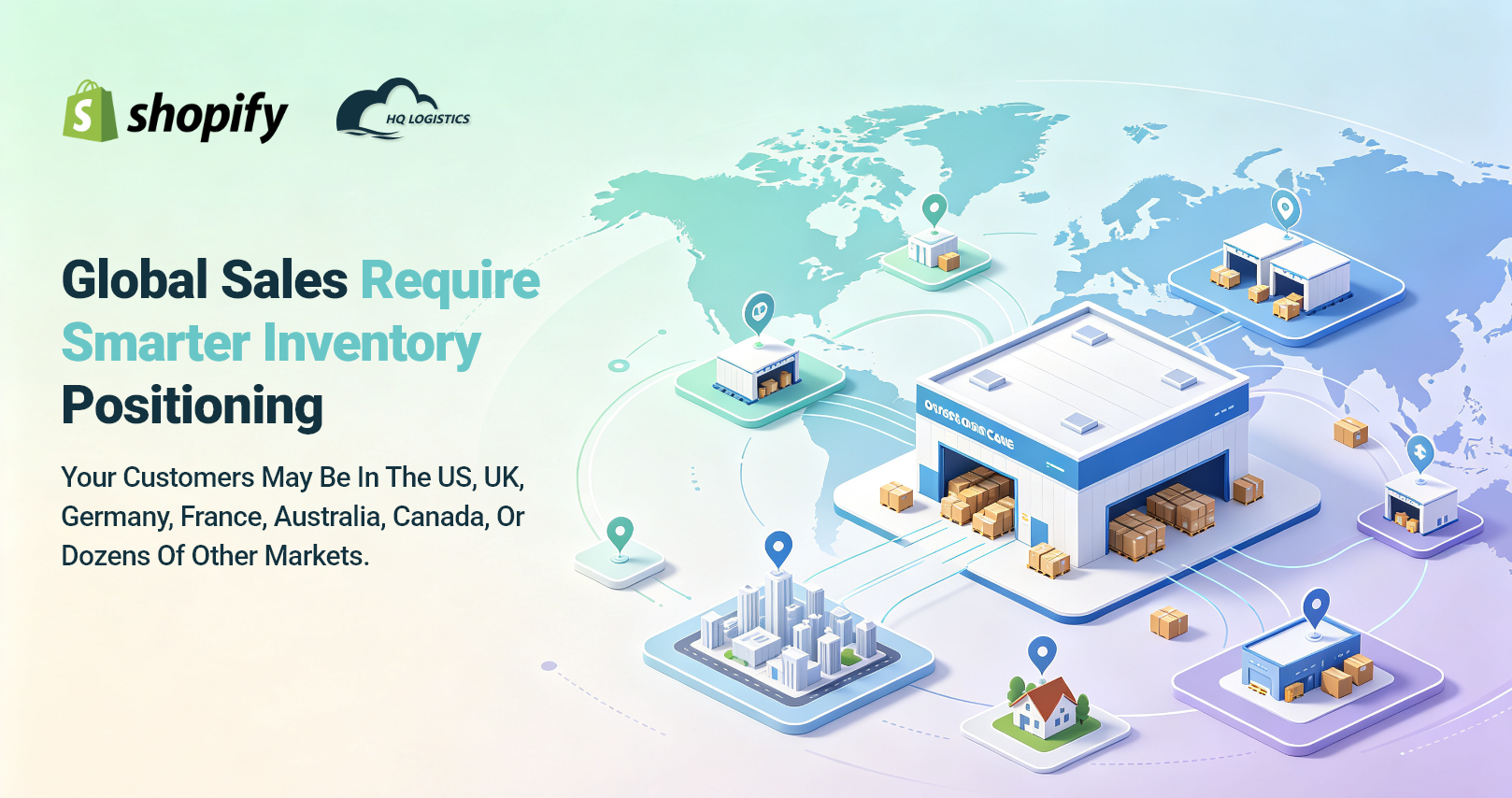
6. Peak Season Can Expose Fulfillment Weaknesses
Q4 is where many growing stores discover whether their fulfillment system can really scale.
Halloween.
Black Friday.
Cyber Monday.
Christmas.
A successful campaign can turn a normal day into a massive order spike.
Shopify recommends preparing inventory and fulfillment capacity ahead of seasonal demand rather than waiting until the peak arrives.
Before peak season, ask your fulfillment partner:
Can your warehouse handle my expected volume? | How quickly can orders be processed? | Is enough inventory already stocked? | What happens if sales exceed the forecast? | Do you have backup shipping options? | Can inventory be moved between warehouses? | How are delayed or exception orders handled?
If the answer to these questions is unclear, your fulfillment partner may already be becoming a bottleneck.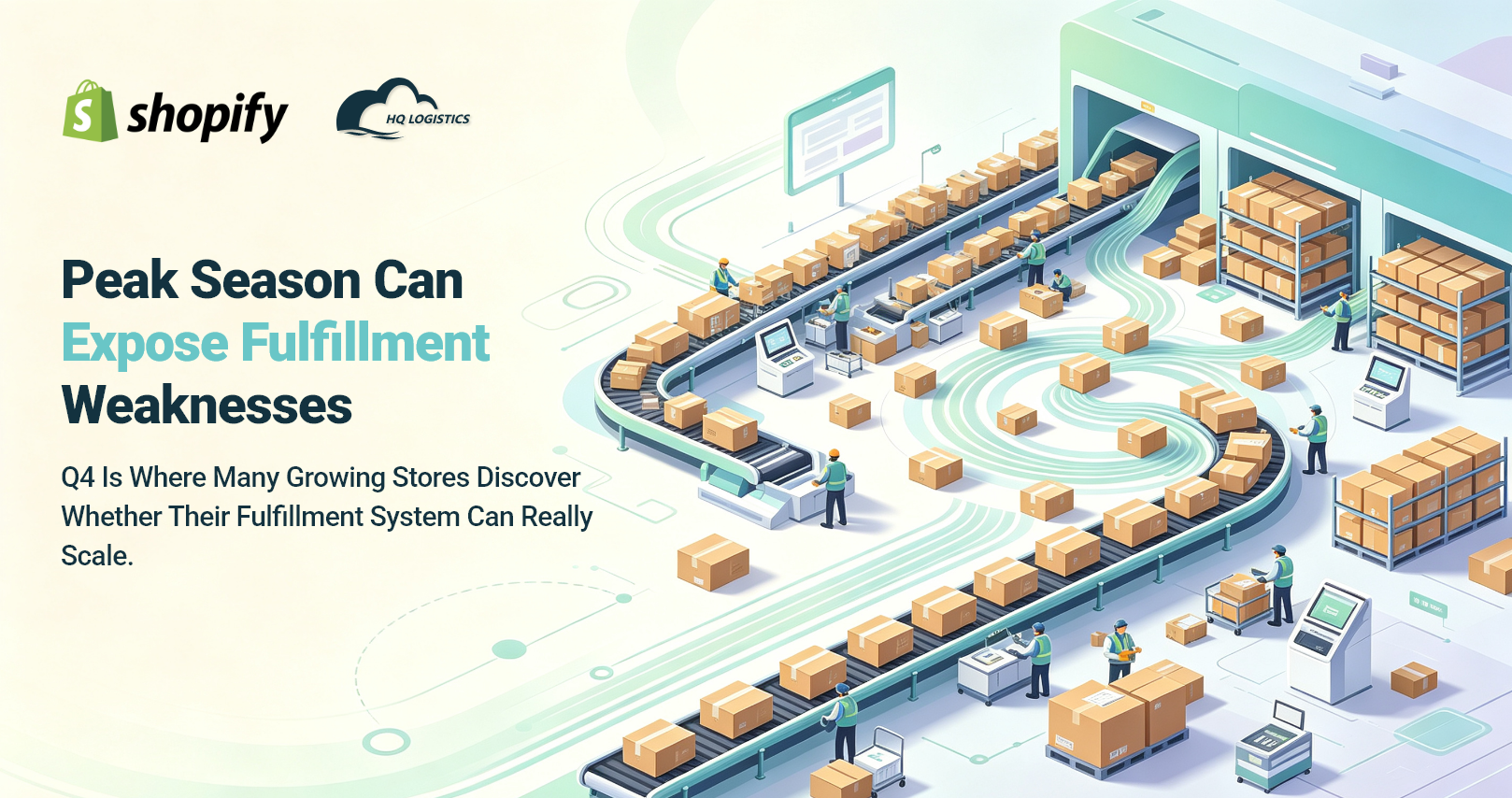
7. Fulfillment Cost Becomes More Important at Scale
When you process a small number of orders, a small cost difference may not matter much.
When you process thousands of orders, it can significantly affect your margins.
Your actual fulfillment cost may include:
Product Cost + Processing + Packaging + Storage + Shipping + Returns
As volume increases, you should regularly review: Product sourcing prices | Shipping rates | Packaging costs | Warehouse fees | Processing fees | Return costs | Inventory holding costs
A fulfillment partner should help you identify opportunities to optimize the entire cost structure—not simply provide a shipping quote.
This is one reason growing Shopify brands increasingly look beyond basic dropshipping and toward more integrated supply chain solutions.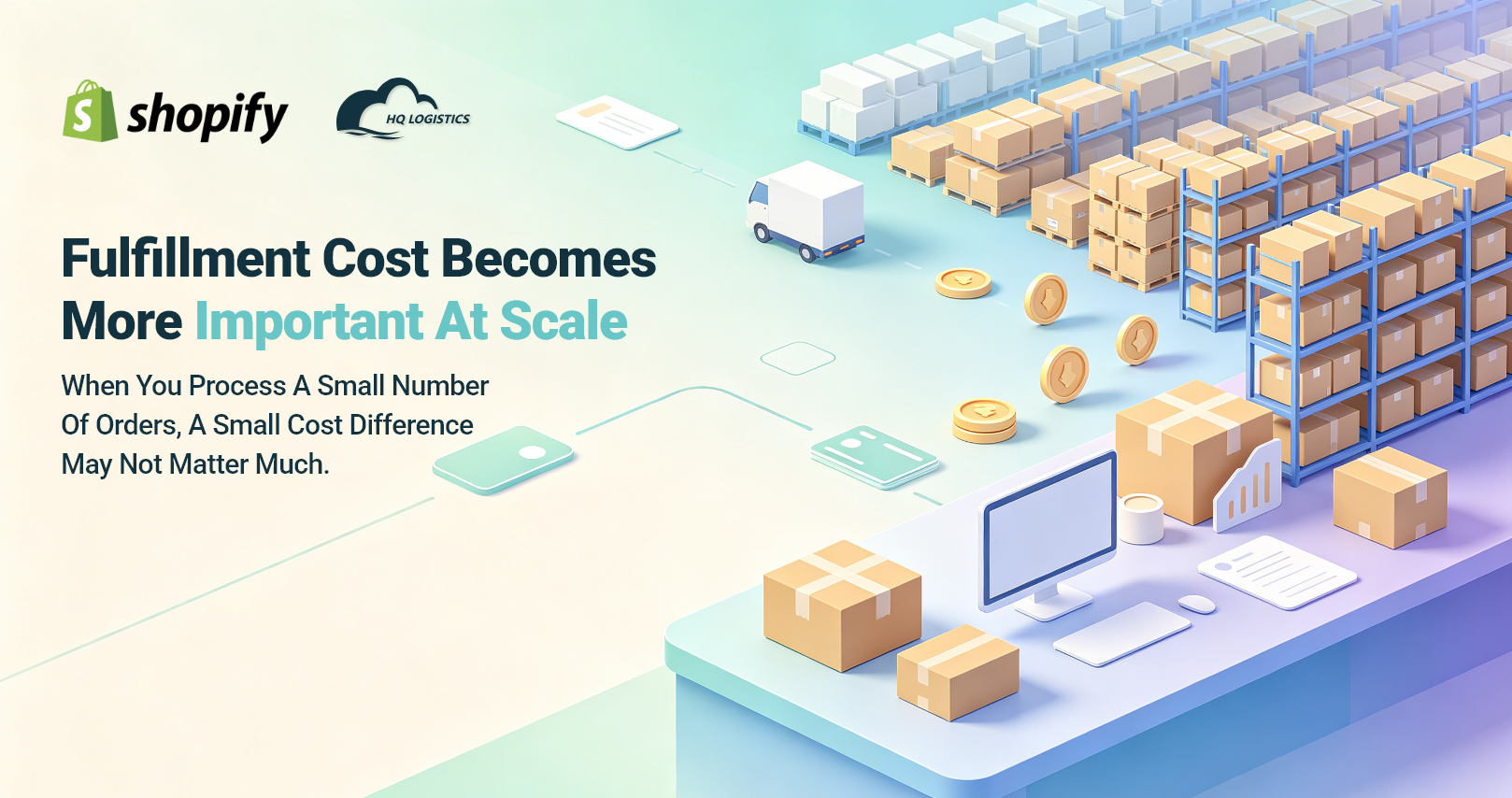
8. Your Fulfillment Partner Should Grow With Your Business
The biggest sign that you have outgrown a fulfillment partner is not necessarily slow shipping.
It is limited scalability.
Your business may now need:
| Early-Stage Needs | Growth-Stage Needs |
|---|---|
| Product sourcing | Supplier management |
| Dropshipping | Bulk purchasing |
| Basic fulfillment | High-volume fulfillment |
| Standard products | Product customization |
| Generic packaging | Brand packaging |
| China shipping | Multi-location inventory |
| Basic tracking | Real-time inventory visibility |
| Manual communication | Automated systems |
| One supplier | Backup supplier network |
| Order fulfillment | Supply chain management |
The difference is simple:
You are no longer just selling products.
You are operating a brand.
And your supply chain needs to evolve with it.
CJ vs. A More Integrated Fulfillment Partner
This does not mean every Shopify seller should immediately leave CJ.
If your current setup is working, your costs are healthy, your products are stable, and your customers are satisfied, there may be no reason to change.
But if you are experiencing growth-related problems, it may be time to compare alternatives.
| Area | Basic Dropshipping Setup | Growth-Focused Fulfillment |
|---|---|---|
| Product sourcing | ✓ | ✓ |
| Order fulfillment | ✓ | ✓ |
| Shopify integration | ✓ | ✓ |
| Warehouse storage | ✓ | ✓ |
| Custom packaging | Sometimes | ✓ |
| Factory sourcing | Limited | ✓ |
| Quality control | Basic | ✓ |
| Supplier management | Limited | ✓ |
| Inventory planning | Limited | ✓ |
| Multi-warehouse strategy | Limited | ✓ |
| Product customization | Limited | ✓ |
| Supply chain optimization | Limited | ✓ |
| Brand growth support | Limited | ✓ |
The goal is not to find the cheapest fulfillment provider.
The goal is to find the partner that can support your next growth stage.
When Should You Consider Switching?
You may want to review your current fulfillment setup if several of these situations sound familiar:
Your order volume is increasing quickly
Your daily orders are growing, but fulfillment speed is becoming less predictable.
Your best-selling products keep going out of stock
Your marketing is working, but your supply chain cannot replenish inventory fast enough.
Your margins are getting tighter
Shipping, sourcing, packaging, and fulfillment costs are taking an increasingly large share of revenue.
You want to build a real brand
Generic products and packaging are no longer enough for your long-term strategy.
You are expanding internationally
Your customers are spread across multiple countries, but your inventory remains concentrated in one location.
You need better supplier management
You are spending too much time communicating with factories, checking quality, comparing prices, and managing production.
Q4 is approaching
You know your sales could increase dramatically, but you are not confident that your current fulfillment system can handle the volume.
If several boxes are checked, it may be time to upgrade.
What Should You Look for in Your Next Fulfillment Partner?
Don't evaluate a fulfillment partner based only on shipping prices.
Look at the entire supply chain.
1. Sourcing Capability
Can they find factories and negotiate competitive prices?
2. Quality Control
Can they inspect products before they reach customers?
3. Inventory Management
Can they provide accurate stock information and help you plan replenishment?
4. Warehousing
Can they support China warehousing as well as overseas inventory positioning?
5. Branding
Can they support custom packaging, labels, inserts, and private-label solutions?
6. Technology
Can orders, inventory, and tracking information sync with your Shopify store?
7. Shipping
Can they provide multiple shipping routes and backup options?
8. Scalability
Can the same partner support you from hundreds to thousands of orders?
That's the difference between a fulfillment vendor and a long-term supply chain partner.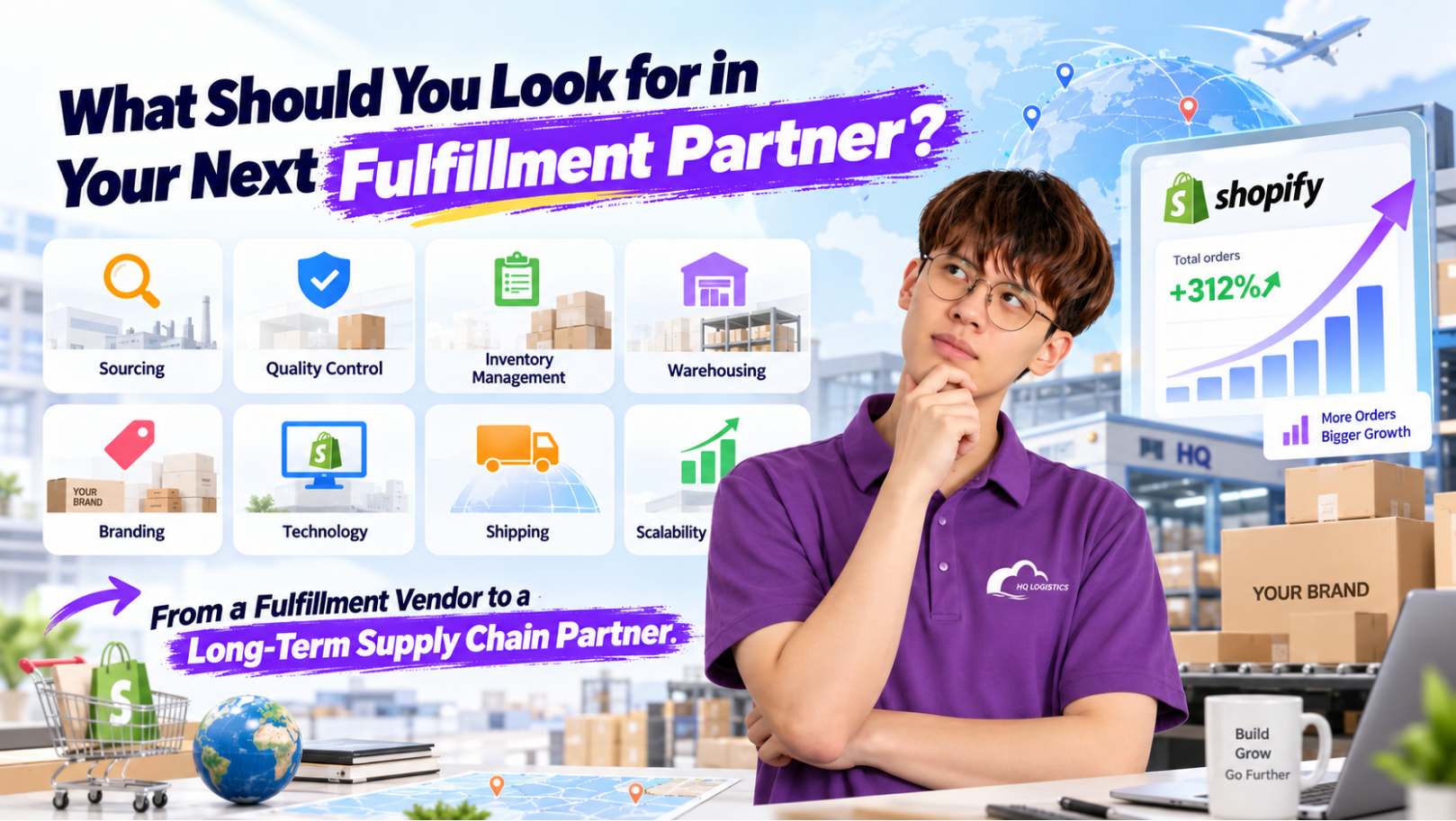
How HQ Can Support Growing Shopify Brands
For Shopify brands that have moved beyond the basic dropshipping stage, HQ takes a more integrated approach.
Instead of focusing only on order fulfillment, HQ connects:
Sourcing → Supplier Management → Quality Control → Inventory → Warehousing → Customization → Fulfillment → Global Shipping
This gives growing brands one supply chain partner instead of managing multiple disconnected providers.
HQ can support:
Factory-direct product sourcing | No-MOQ product testing | Quality inspection | Product photography | Custom packaging | Private labeling | China warehousing | Overseas warehousing | Shopify integration | Automated order fulfillment | Real-time tracking | Global shipping solutions | Inventory planning and replenishment
The objective is simple:
Help your fulfillment system keep up with your store—not become the reason your store slows down.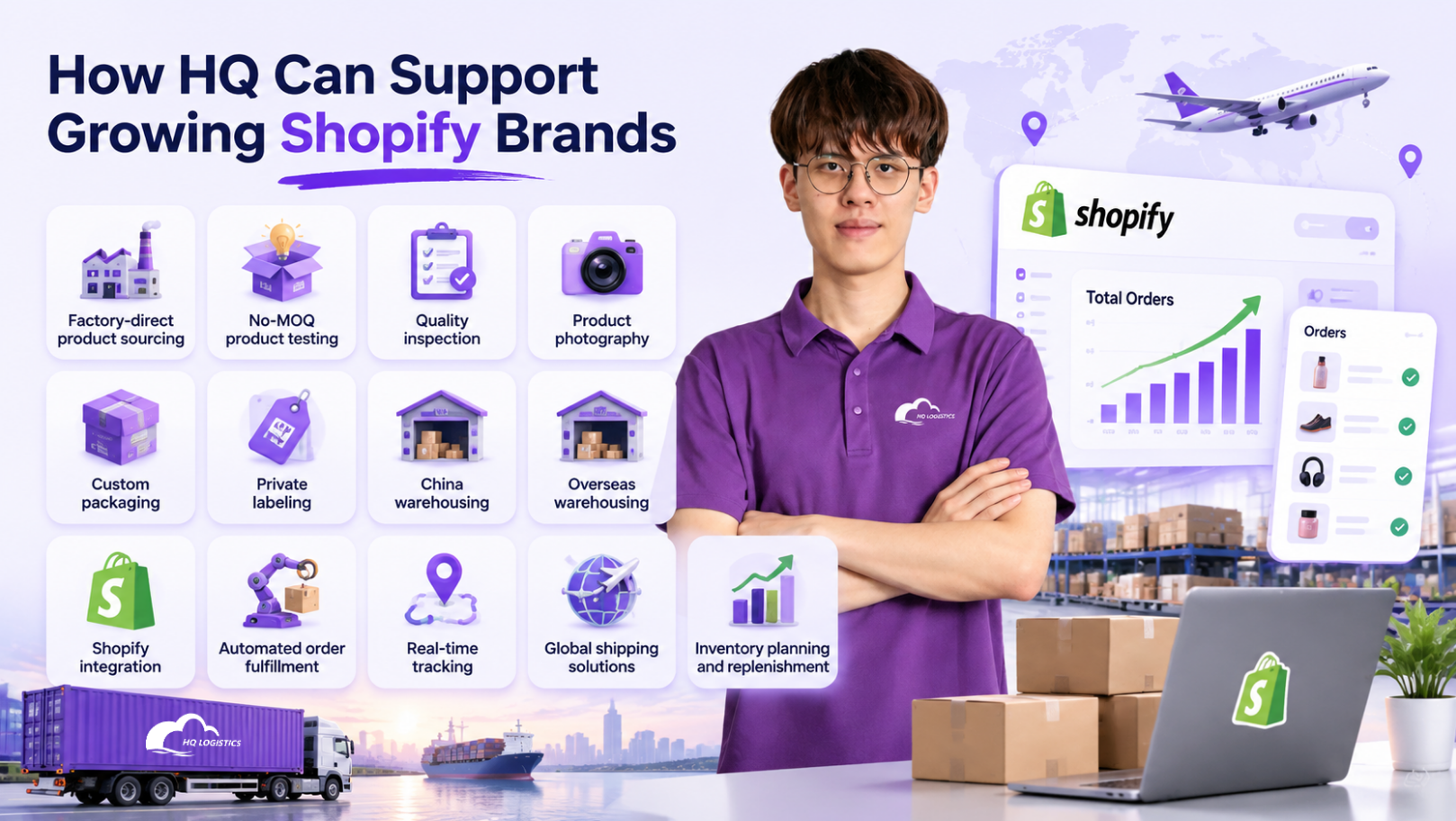
Final Thoughts
CJ Dropshipping can be a useful starting point for Shopify sellers because it combines sourcing, fulfillment, warehousing, shipping, and ecommerce integrations in one platform.
But your business will not stay at the starting line forever.
As your order volume, product range, brand requirements, and international sales grow, your supply chain needs will become more sophisticated.
At that point, the right question is not:
“Which fulfillment company is the best?”
It is:
“Which fulfillment partner can grow with my business?”
If your Shopify store is growing, now is the right time to review your sourcing, inventory, warehousing, fulfillment, and shipping strategy—especially before the next peak season.
Your store is growing. Make sure your supply chain is ready to grow with it.
FAQs
Is CJ Dropshipping good for Shopify stores?
Yes. CJ supports Shopify integration, product sourcing, order fulfillment, warehousing, custom packaging, and global shipping, making it a practical option for many dropshipping and ecommerce sellers.
When should I consider switching fulfillment partners?
Consider reviewing alternatives when your order volume increases rapidly, stockouts become frequent, fulfillment costs rise, you need more customization, or your current partner cannot support your international growth.
Should I switch before Q4?
Ideally, you should evaluate your fulfillment setup before peak season rather than during it. Inventory, warehouse capacity, shipping routes, and supplier lead times should be planned in advance.
Is switching fulfillment providers difficult?
It does not have to be. A phased approach can reduce risk: test your best-selling SKUs first, compare fulfillment performance, then gradually move more inventory once the new workflow is stable.
What is more important than low fulfillment prices?
For a growing brand, total supply chain performance matters more than the lowest individual shipping quote. Look at sourcing costs, quality, inventory availability, fulfillment speed, shipping reliability, branding, returns, and scalability together.