35–50% Lower Fulfillment Costs? How U.S. and EU Warehousing Can Change Your Shipping Strategy
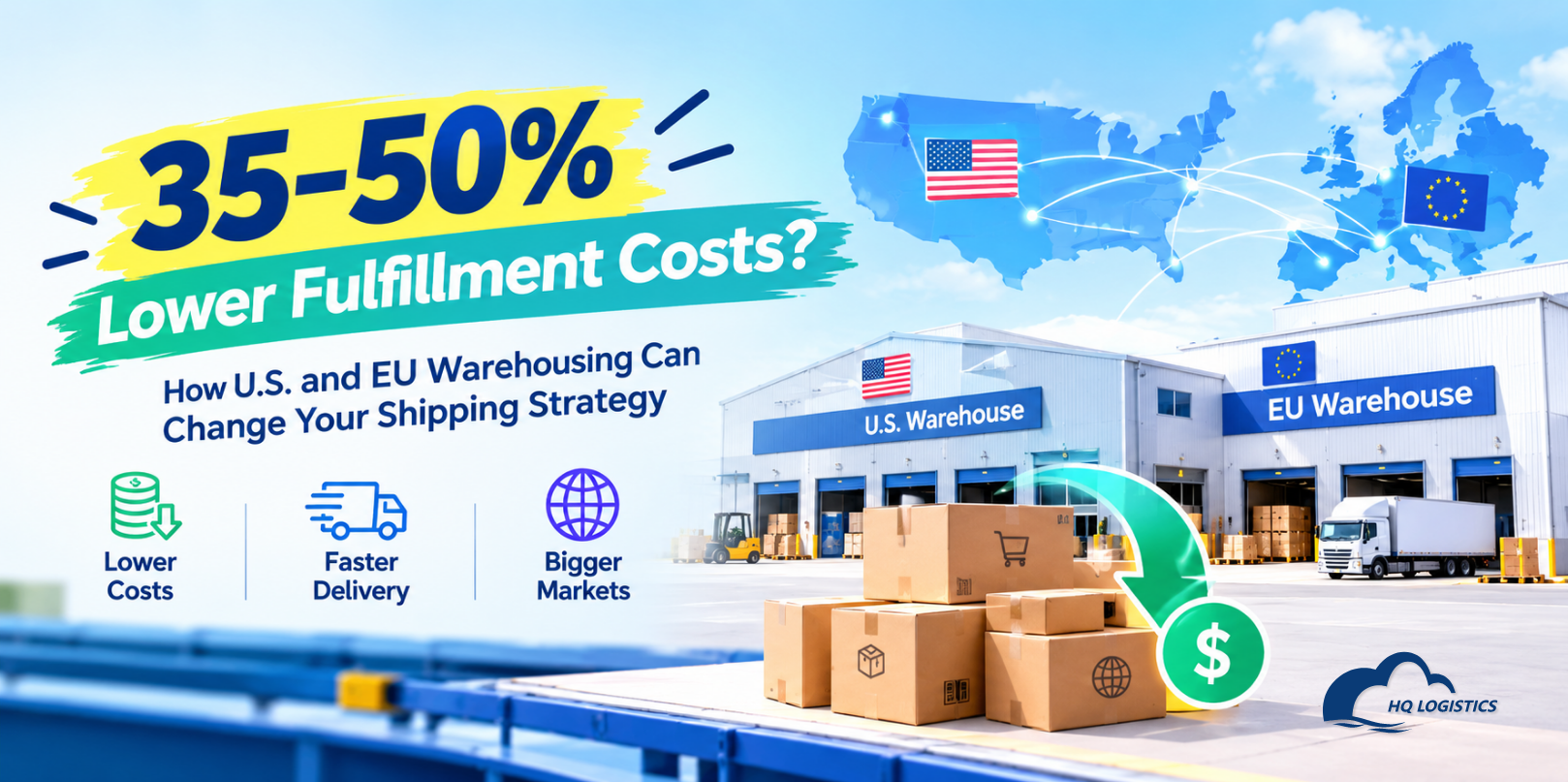
35–50% Lower Fulfillment Costs? How U.S. and EU Warehousing Can Change Your Shipping Strategy
Shipping costs can quietly eat into your ecommerce profits.
As your Shopify store grows, sending every order directly from China may seem simple. But once you have stable sales in the U.S. or Europe, international shipping can become one of the biggest costs in your fulfillment strategy.
This is where U.S. and EU warehousing can make a difference.
For some growing ecommerce brands, moving proven inventory closer to customers can potentially reduce total fulfillment costs by 35–50%, depending on product weight, order volume, shipping routes, storage costs, and fulfillment requirements.
But overseas warehousing is not simply about putting products in another country.
The real question is:
When should you move inventory overseas, how much should you stock, and which fulfillment model makes the most sense for your brand?
Let's take a closer look.
Why Shipping Every Order From China May Become Expensive
China fulfillment is often an efficient starting point for ecommerce brands.
You can source products, store inventory, and ship orders internationally without committing to overseas inventory.
This model works especially well when:
You are testing new products | Your order volume is still unpredictable | You have many low-volume SKUs | You are selling across multiple countries | You want to minimize upfront inventory investment
But as your business grows, the economics can change.
Imagine your store receives hundreds of orders every day from the U.S.
If every order follows:
China Warehouse → International Shipping → U.S. Customer
you are paying for international transportation on every individual order.
You may also face:
Higher per-order shipping costs | Longer delivery times | Greater exposure to international shipping fluctuations | Peak-season capacity pressure | More complex delivery management
At this stage, it may make sense to change the way you position inventory.
Instead of shipping every order internationally, you can move proven products closer to your customers.
China → U.S. Warehouse → U.S. Customer
Or:
China → EU Warehouse → European Customer
That is the basic idea behind overseas fulfillment.
How U.S. Warehousing Can Reduce Fulfillment Costs
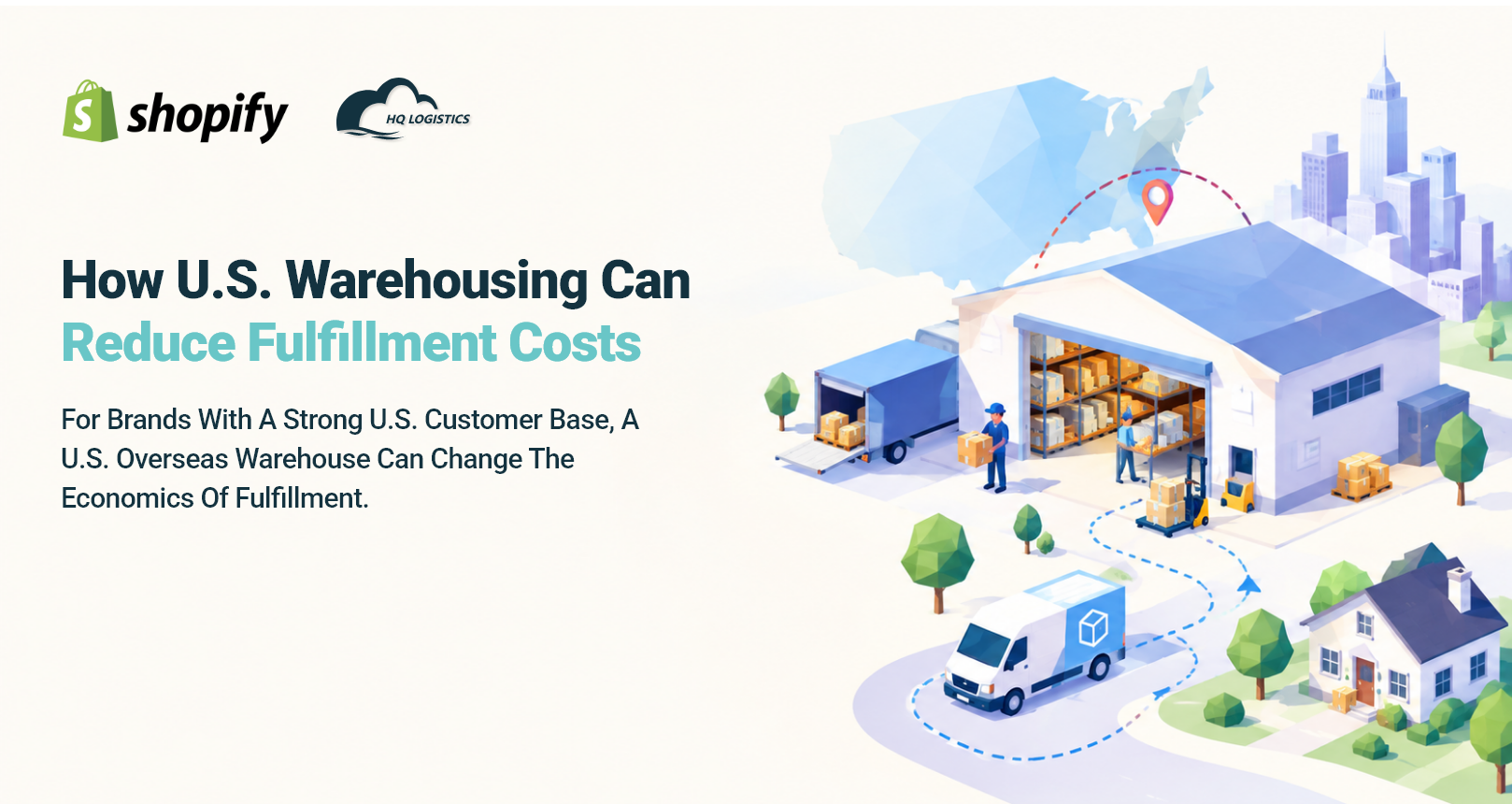
For brands with a strong U.S. customer base, a U.S. overseas warehouse can change the economics of fulfillment.
Instead of sending individual parcels from China to American customers, you can pre-stock inventory in the U.S.
Your fulfillment flow becomes:
Bulk Inventory → U.S. Warehouse → Domestic U.S. Delivery
The biggest advantage is that the international transportation leg happens before the customer places an order.
Once the inventory is in the U.S., individual customer orders can be fulfilled domestically.
1. Lower Per-Order Shipping Costs
International parcel shipping can be expensive when every order needs to cross borders.
With inventory already in the U.S., domestic fulfillment can often provide a more efficient cost structure.
The exact savings depend on:
Product dimensions | Product weight | Daily order volume | Destination | Shipping service | Inventory turnover | Packaging requirements
For some brands, the overall fulfillment cost can potentially be reduced by 35–50% after moving suitable products to an overseas warehouse.
However, this should be calculated based on your actual order data rather than treated as a universal percentage.
2. Faster U.S. Delivery
Cost is not the only reason to consider a U.S. warehouse.
Customers increasingly expect fast delivery.
When products are already positioned inside the U.S., you can avoid waiting for every individual parcel to travel internationally from China.
This can help improve:
Delivery speed | Customer experience | Conversion rates | Repeat purchases | Holiday fulfillment performance
For brands preparing for Black Friday, Cyber Monday, and Christmas, having bestsellers in the U.S. before demand peaks can be particularly valuable.
How EU Warehousing Changes European Fulfillment
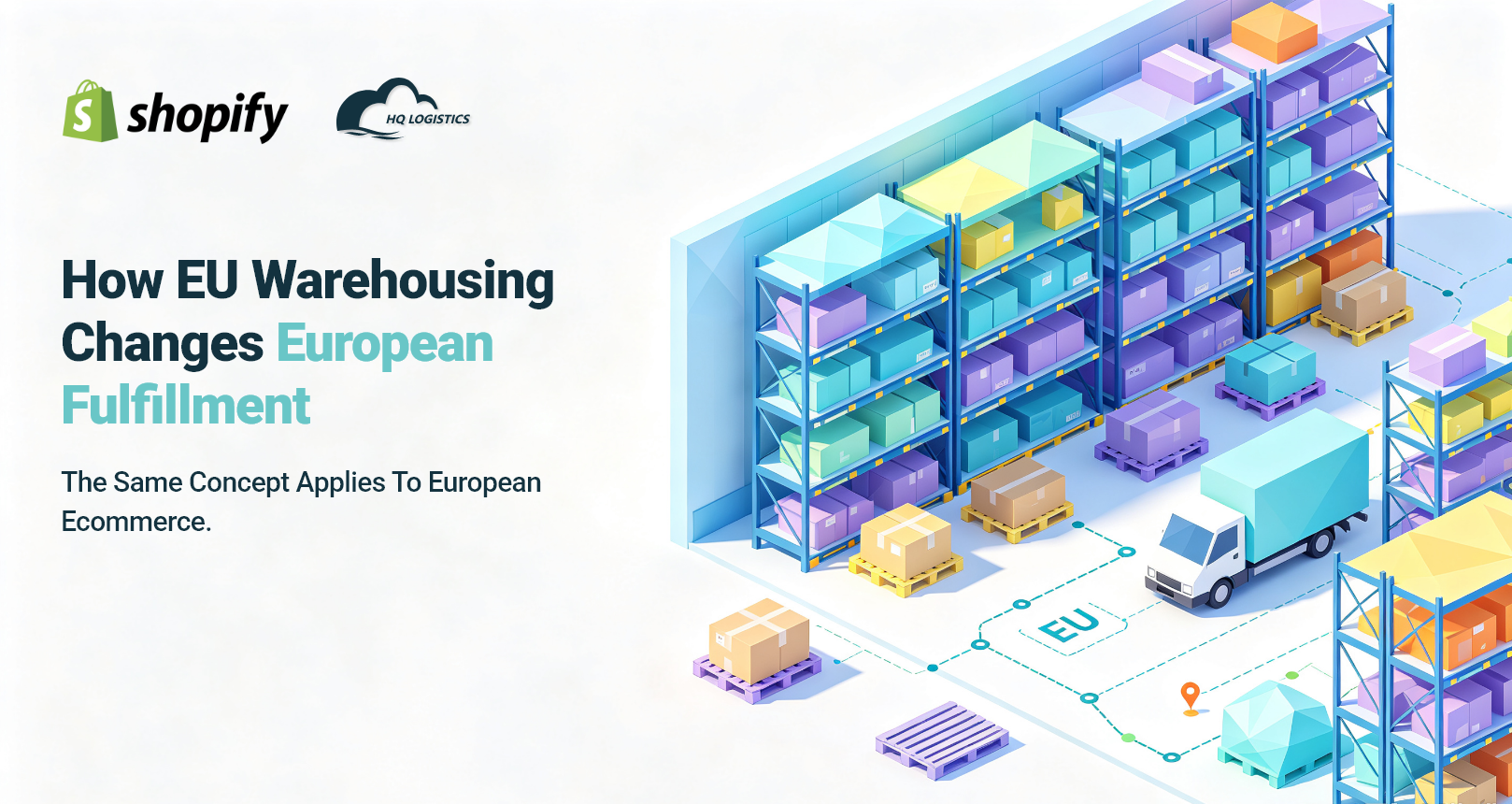
The same concept applies to European ecommerce.
If your Shopify store receives consistent orders across multiple EU countries, shipping every order directly from China may not always be the most efficient solution.
Instead, you can position inventory inside the EU.
For example:
China → EU Warehouse → France
China → EU Warehouse → Germany
China → EU Warehouse → Italy
China → EU Warehouse → Spain
Instead of managing a separate fulfillment setup for every European market, one strategically positioned EU warehouse can help you serve multiple EU destinations.
One EU Warehouse, Multiple Markets
This is particularly useful for brands that are expanding across Europe.
You may start with customers in one country.
Then your store grows into:
France → Germany → Italy → Spain → Netherlands → Belgium
Managing international fulfillment separately for every market can quickly become complicated.
An EU warehouse can give you a centralized inventory location while allowing orders to be fulfilled across multiple EU countries.
This creates a more scalable model:
One Inventory Hub → Multiple EU Markets
U.S. Warehouse vs. EU Warehouse: Which One Should You Choose?
The answer depends primarily on where your customers are.
| Factor | U.S. Warehouse | EU Warehouse |
|---|---|---|
| Main Market | United States | EU countries |
| Fulfillment Model | Domestic U.S. fulfillment | Cross-border EU fulfillment |
| Best For | Brands with stable U.S. demand | Brands expanding across Europe |
| Main Advantage | Closer to U.S. customers | One inventory hub for multiple EU markets |
| Ideal Products | Proven bestsellers | Proven European-market products |
| Inventory Strategy | Pre-stock high-volume SKUs | Centralize inventory for EU demand |
If most of your orders come from the U.S., a U.S. warehouse may provide the stronger advantage.
If your customers are distributed across several EU countries, EU warehousing may offer greater flexibility.
And for brands selling in both markets, a combination of U.S. + EU warehousing can create a more localized global fulfillment network.
Don't Move Your Entire Inventory Overseas
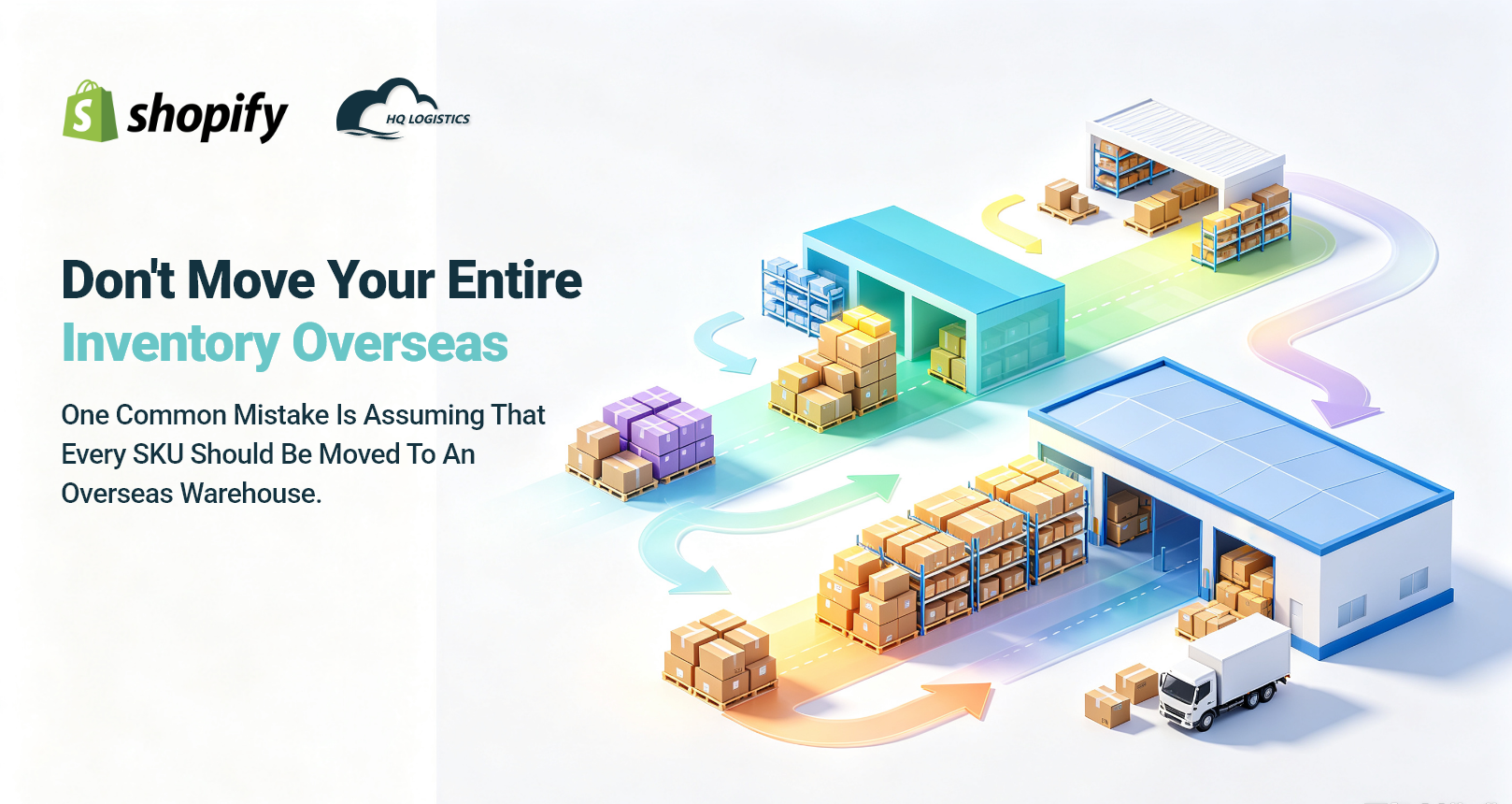
One common mistake is assuming that every SKU should be moved to an overseas warehouse.
That is rarely necessary.
Instead, consider a hybrid fulfillment strategy.
Keep in China:
New products | Low-volume SKUs | Seasonal test products | Long-tail inventory | Products with unpredictable demand
Pre-stock overseas:
Bestsellers | Stable SKUs | High-volume products | Products with predictable demand | Products with strong repeat sales
This gives you the flexibility of China fulfillment while benefiting from the speed and potential cost savings of overseas warehousing.
The model looks like this:
New Product → China Fulfillment
Product Proves Demand → Inventory Forecast
Best Seller → Overseas Warehouse
Stable Sales → Local Fulfillment
This is often a more practical approach than moving everything overseas at once.
5 Signs Your Brand May Be Ready for Overseas Warehousing
Not every ecommerce business needs an overseas warehouse.
But you may want to consider one if you meet several of these conditions.
1. Most of Your Orders Come From One Market
If a large percentage of your orders consistently come from the U.S., shipping every order individually from China may no longer be the most efficient option.
The same applies if your sales are concentrated across several EU markets.
2. Your Bestsellers Are Predictable
Overseas warehousing works best when you know what customers are going to buy.
If your top SKUs have stable demand, you can forecast inventory more accurately.
3. Your Order Volume Is Growing
As order volume increases, shipping economics can change.
Higher order volume can make bulk inventory transportation and local fulfillment more attractive.
4. Customers Expect Faster Delivery
If customers are increasingly asking about delivery times, moving inventory closer to them can improve your fulfillment experience.
5. International Shipping Is Eating Into Your Margins
Calculate your actual fulfillment cost per order.
If international shipping represents a significant portion of your product margin, overseas warehousing may be worth evaluating.
How to Calculate Whether an Overseas Warehouse Is Worth It
Don't make the decision based only on warehouse storage fees.
You should calculate the total fulfillment cost.
A simple comparison is:
China Fulfillment
Product Cost + International Shipping + Packaging + Processing + Other Fees
vs.
Overseas Fulfillment
Product Cost + Bulk Transportation + Storage + Local Fulfillment + Domestic Shipping + Other Fees
Then compare the cost per delivered order.
You should also consider the value of:
Faster delivery | Lower shipping risk | Better customer experience | More predictable fulfillment | Peak-season capacity | Inventory flexibility
A warehouse that appears more expensive on paper may still produce better overall economics if it significantly reduces shipping costs and improves fulfillment efficiency.
35–50% Lower Fulfillment Costs: What Actually Drives the Savings?
The potential 35–50% reduction does not come from warehousing alone.
It can come from optimizing the entire fulfillment structure.
1. Bulk Transportation
Moving inventory in larger quantities can reduce the average transportation cost per unit compared with shipping individual parcels internationally.
2. Domestic Fulfillment
Once inventory is in the destination market, orders can be fulfilled through local delivery networks.
3. Better Inventory Positioning
Storing fast-moving products closer to customers reduces unnecessary international parcel transportation.
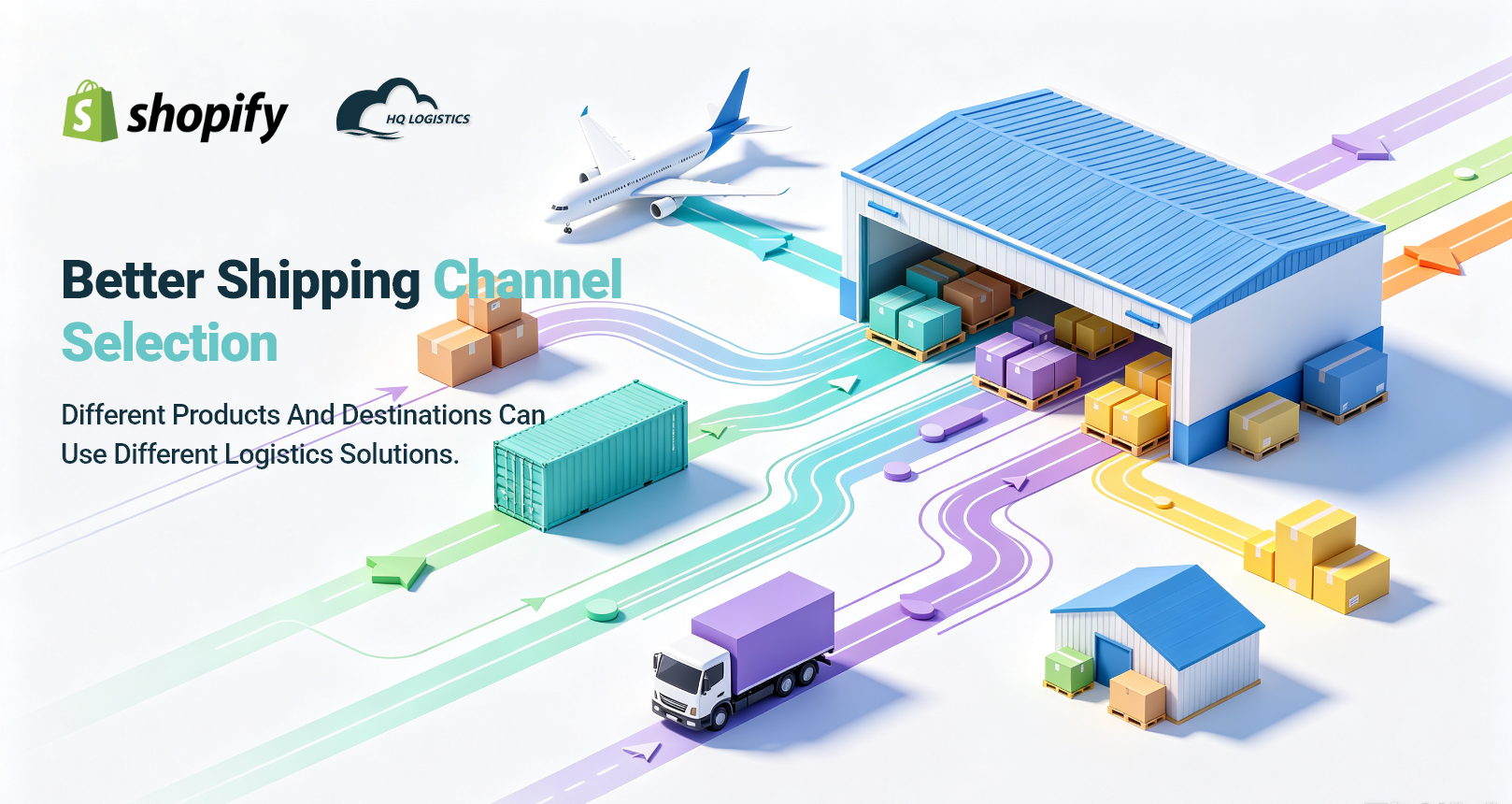
4. Better Shipping Channel Selection
Different products and destinations can use different logistics solutions.
5. Higher Order Density
When order volume becomes large enough, local fulfillment can become more cost-efficient.
This is why the real opportunity is not simply:
"Get a warehouse."
It is:
"Build the right inventory + warehouse + shipping strategy."
Why Multiple Shipping Channels Matter
Overseas warehousing should not mean using only one logistics channel.
Different products require different solutions.
For example:
Standard products | Oversized products | Small electronics | Battery-powered products | Fragile items | Special-category products
may have different transportation requirements.
A flexible fulfillment partner should have access to multiple logistics channels and help match the right option to:
Product + Destination + Weight + Delivery Requirement
This can help brands balance:
Cost + Speed + Reliability
rather than optimizing only one factor.
U.S. and EU Warehousing for Q4
Q4 is one of the strongest reasons to review your inventory positioning.
Black Friday, Cyber Monday, Christmas, and holiday promotions can create sharp increases in order volume.
If you wait until demand spikes before moving inventory, it may already be too late.
A better approach is:
Step 1: Identify Q4 Bestsellers
Look at your historical sales and current trends.
Step 2: Forecast Demand
Estimate how many units you may need during the peak period.
Step 3: Choose Inventory for Overseas Storage
Prioritize products with predictable demand.
Step 4: Ship Inventory Early
Move stock before the peak-season logistics pressure begins.
Step 5: Monitor Inventory
Use real-time inventory information to track sales and replenishment.
Step 6: Keep Backup Inventory in China
Don't put your entire supply chain in one location.
This creates a flexible model:
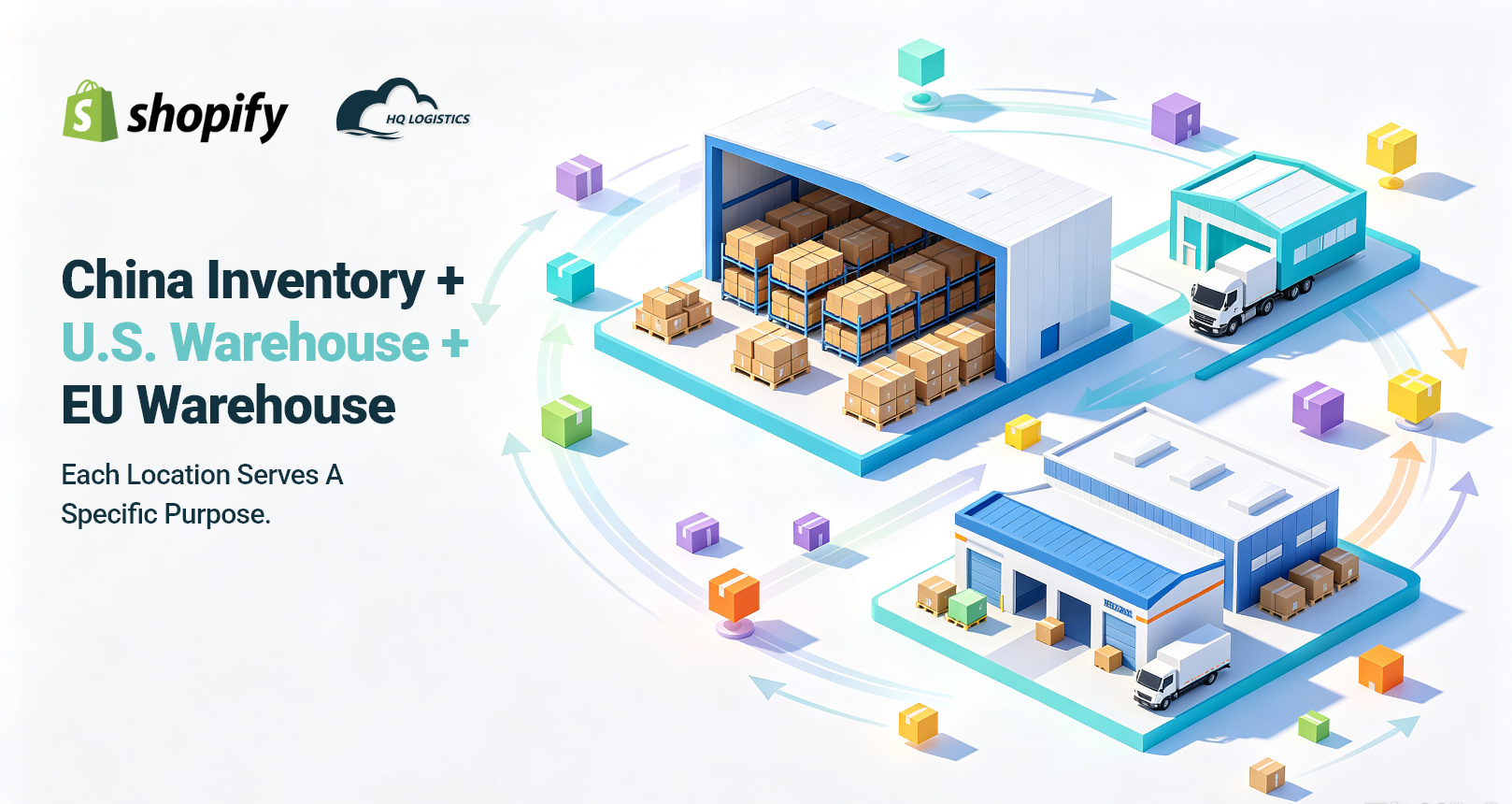
China Inventory + U.S. Warehouse + EU Warehouse
Each location serves a specific purpose.
HQ's Approach to U.S. & EU Fulfillment
For growing ecommerce brands, overseas warehousing works best when it is connected to the rest of the supply chain.
HQ can support brands across:
Sourcing → Quality Control → China Fulfillment → Overseas Warehousing → Custom Packaging → Global Shipping
U.S. Overseas Warehouse
For brands with stable U.S. sales, HQ can help position inventory in the U.S. and fulfill orders domestically.
This can help reduce dependence on international parcel shipping and create a more localized fulfillment experience.
EU Global Warehouse
For brands selling across Europe, an EU warehouse can provide a centralized inventory point for multiple EU markets.
Instead of building separate inventory systems for every country, brands can use one EU fulfillment hub to support cross-border European orders.
Multiple Suppliers
Overseas warehousing is only one part of the strategy.
HQ can also work with multiple suppliers to provide alternative sourcing options and improve supply flexibility.
This is particularly useful during Q4 when production capacity and product availability can change quickly.
Quality Inspection
Before inventory is sent overseas, products can go through quality inspection.
This is especially important for categories where product quality has a direct impact on customer satisfaction.
Custom Packaging
Brands can also combine overseas fulfillment with custom packaging and branding solutions.
For European customers, eco-friendly packaging options can be considered where appropriate.
The goal is not simply to move inventory closer to customers.
It is to build a fulfillment system that supports your brand from sourcing to final delivery.
Should You Use China Fulfillment, U.S. Warehousing, or EU Warehousing?
There is no single answer for every ecommerce brand.
Choose China Fulfillment When:
You are testing products | Sales are unpredictable | You have many low-volume SKUs | You want minimal overseas inventory | Your main goal is product flexibility
Consider U.S. Warehousing When:
The U.S. is your primary market | Your bestsellers have stable demand | Order volume is growing | You want domestic U.S. fulfillment | International shipping costs are becoming a major expense
Consider EU Warehousing When:
You sell across multiple EU countries | European sales are stable | You want centralized EU inventory | Faster European fulfillment is important | You are expanding into additional EU markets
Consider a Hybrid Model When:
You sell globally | You have both stable and experimental products | Your U.S. and EU sales are both significant | You want flexibility without putting all inventory overseas
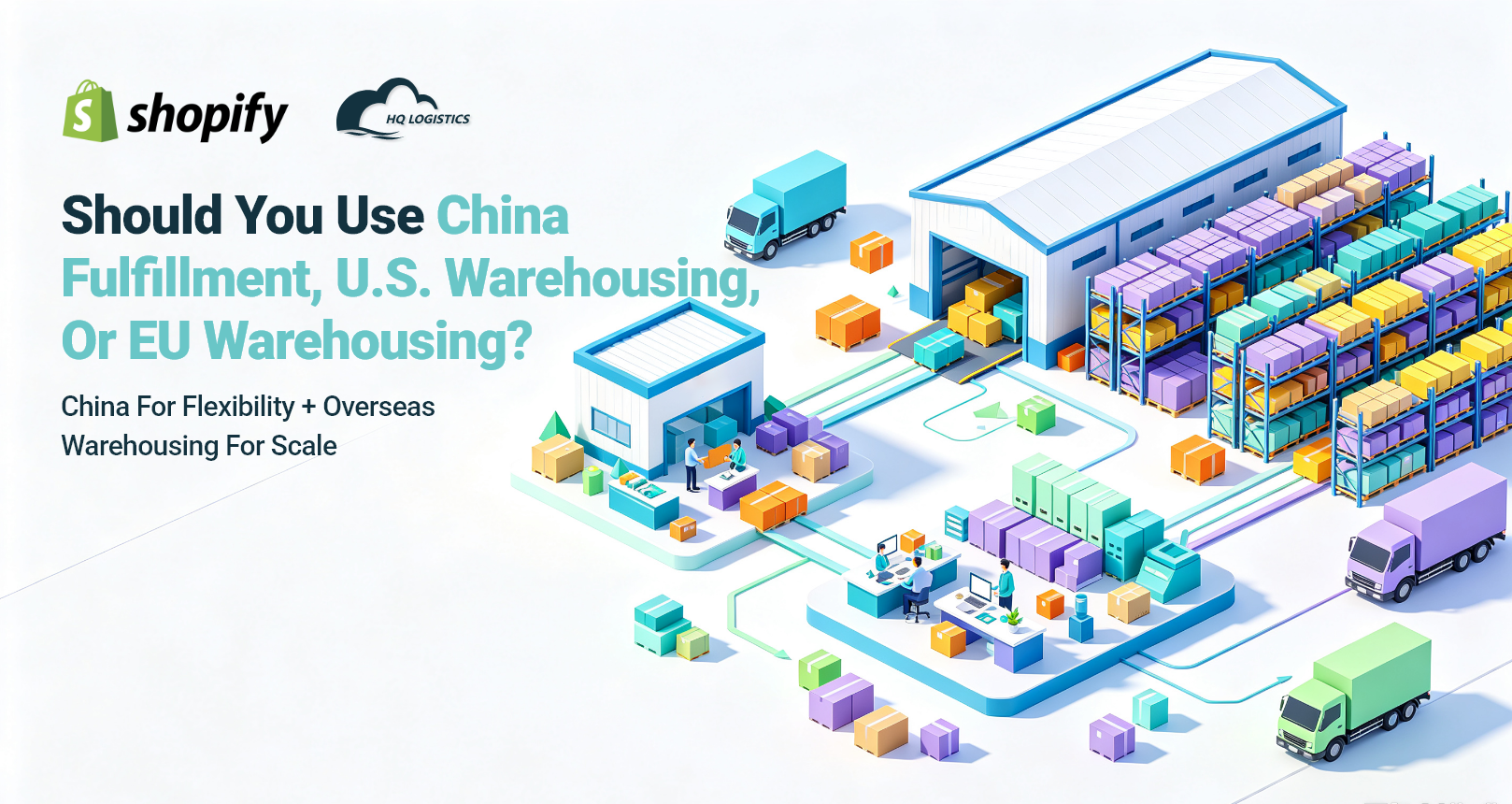
For many growing brands, the hybrid model is the most flexible:
China for Flexibility + Overseas Warehousing for Scale
Final Thoughts
Overseas warehousing is not simply about storing products closer to customers.
It is about changing how your entire fulfillment strategy works.
When your store is small, shipping directly from China may be the simplest option.
When your brand grows, however, you may need to think differently:
Where is my inventory?
Where are my customers?
Which products should be stocked overseas?
Which shipping channels provide the best balance of cost and speed?
How can I reduce fulfillment costs without sacrificing delivery quality?
For some brands, the answer can mean 35–50% lower fulfillment costs, but the actual savings depend on your products, order volume, destinations, and fulfillment model.
The best strategy is not necessarily to move everything overseas.
It is to put the right inventory in the right warehouse and use the right shipping channel for each market.
China for sourcing and flexibility.
U.S. warehousing for domestic U.S. fulfillment.
EU warehousing for multiple European markets.
Multiple suppliers and shipping channels for greater resilience.
That's how overseas warehousing can become more than a storage solution—it can become a growth strategy.
FAQs
Can overseas warehousing really reduce fulfillment costs by 35–50%?
It can for some businesses, but there is no universal savings percentage. The result depends on product weight and dimensions, order volume, destination, shipping routes, storage costs, and the mix of China and local fulfillment. Brands should compare their actual total cost per delivered order before making a decision.
When should a Shopify store move inventory to a U.S. warehouse?
Consider a U.S. warehouse when you have stable U.S. demand, predictable bestsellers, growing order volume, and a meaningful share of your costs coming from international shipping.
Is an EU warehouse useful if I sell in several European countries?
Yes. An EU warehouse can provide a centralized inventory location and support fulfillment across multiple EU markets, making it easier to expand without creating a separate warehouse setup for every country.
Should I move all my products to an overseas warehouse?
Usually, no. A hybrid strategy can be more flexible. Keep new and unpredictable products in China while pre-stocking proven bestsellers in overseas warehouses.
What products are best for overseas warehousing?
Products with stable demand, predictable sales, and sufficient order volume are usually better candidates. Fast-moving bestsellers are often more suitable than low-volume or newly launched products.
How can I decide between China fulfillment and overseas fulfillment?
Compare the total cost per delivered order, not just the shipping price. Consider product cost, international transportation, storage, local fulfillment, domestic shipping, inventory turnover, delivery speed, and peak-season requirements.