Custom Eco Packaging in Europe: What Growing Shopify Brands Should Know
Custom Eco Packaging in Europe: What Growing Shopify Brands Should Know
For growing Shopify brands, packaging is no longer just a way to protect a product during shipping.
It is part of the customer experience.
When customers receive an order, the packaging may be the first physical interaction they have with your brand. For brands selling in Europe, packaging can also become part of a broader sustainability strategy.
This is especially important for Shopify brands that are moving from small-batch orders to higher-volume fulfillment.
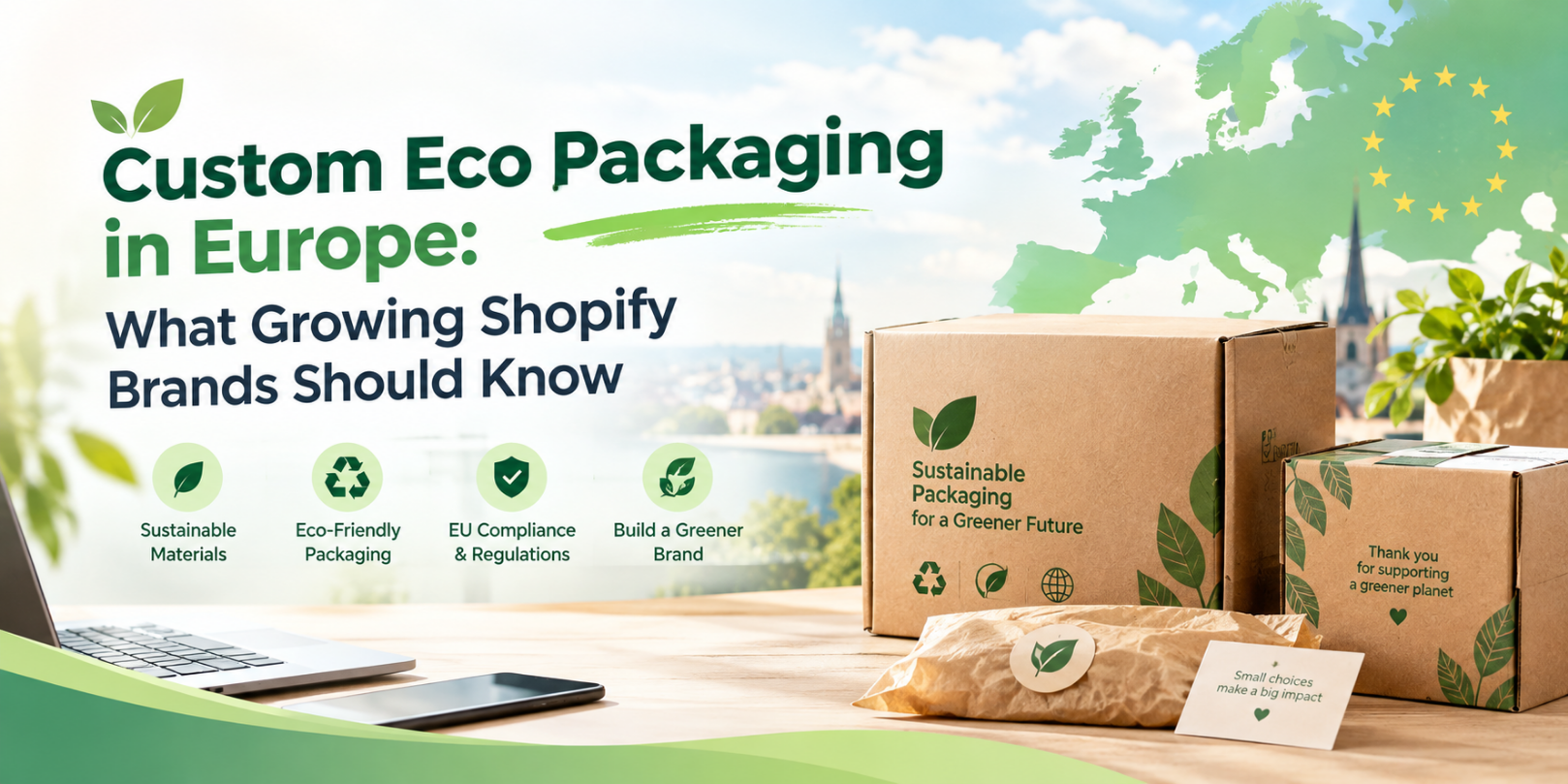
Custom eco packaging in Europe
can help brands create a more consistent unboxing experience while reducing unnecessary packaging and supporting a more sustainable brand image.But choosing eco-friendly packaging is not simply about replacing plastic with paper.
There are several things growing brands should consider.
1. Understand What “Eco Packaging” Actually Means
The term “eco-friendly packaging” can describe many different materials and designs.
Depending on the product, options may include:
Recycled Paper | Recycled Cardboard | Kraft Paper | Paper Mailers | Corrugated Boxes | Recyclable Packaging | Compostable Materials | Reusable Packaging
However, a material being marketed as “green” does not automatically mean it is the best option for every product.
A good packaging strategy should consider the entire process.
For example:
Material → Manufacturing → Packaging → Transportation → Customer Use → Disposal or Recycling
A lightweight package may require less transportation space.
A durable package may reduce product damage and returns.
A recyclable package may be easier for customers to dispose of through existing local systems.
The right choice depends on your product, market, shipping method, and packaging requirements.
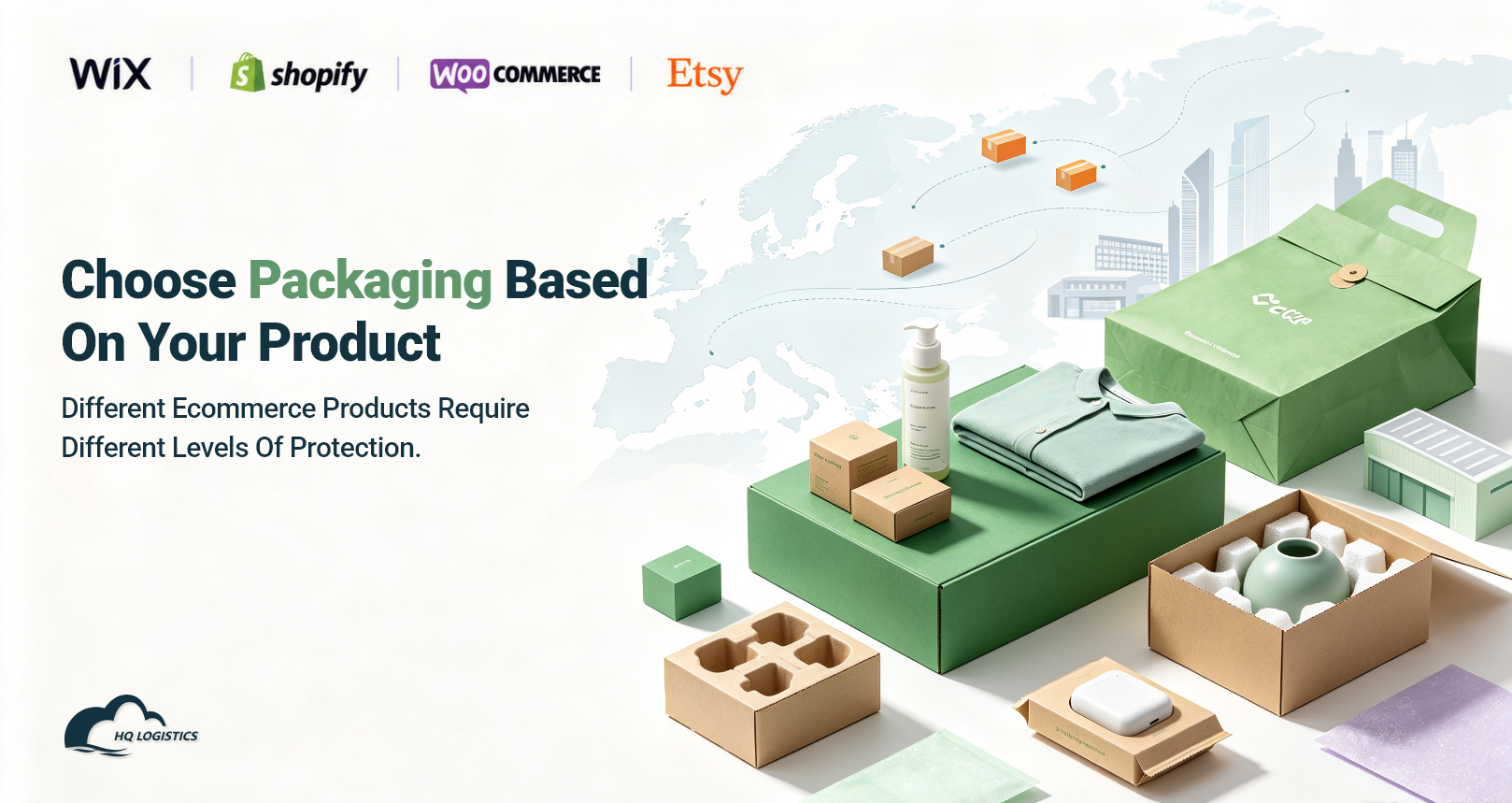
2. Choose Packaging Based on Your Product
Different ecommerce products require different levels of protection.
A lightweight fashion accessory does not need the same packaging as a glass skincare product.
For Shopify brands, common product categories may include:
Beauty Products | Baby Products | Pet Products | Apparel | Accessories | Small Electronics | Home Products | Lifestyle Products
Before choosing custom eco packaging, consider:
Product Weight | Product Size | Fragility | Moisture Protection | Impact Protection | Shipping Distance | Storage Requirements
The goal is to find a balance between sustainability, product protection, and fulfillment efficiency.
If packaging is too weak, damaged products can lead to replacements and returns.
If packaging is unnecessarily large, it can increase material usage and shipping costs.
3. Reduce Excess Packaging
One of the simplest ways to make packaging more sustainable is to avoid using more material than necessary.
Oversized boxes, excessive fillers, and unnecessary layers can increase both packaging waste and transportation volume.
A more efficient packaging design may use:
Right-Sized Boxes | Lightweight Materials | Minimal Fillers | Compact Inserts | Simple Folding Structures
This can also make warehouse fulfillment easier.
When packaging is standardized and easy to assemble, warehouse teams can process orders more consistently.
For growing brands, sustainable packaging and efficient fulfillment do not have to be separate goals.
A well-designed package can support both.
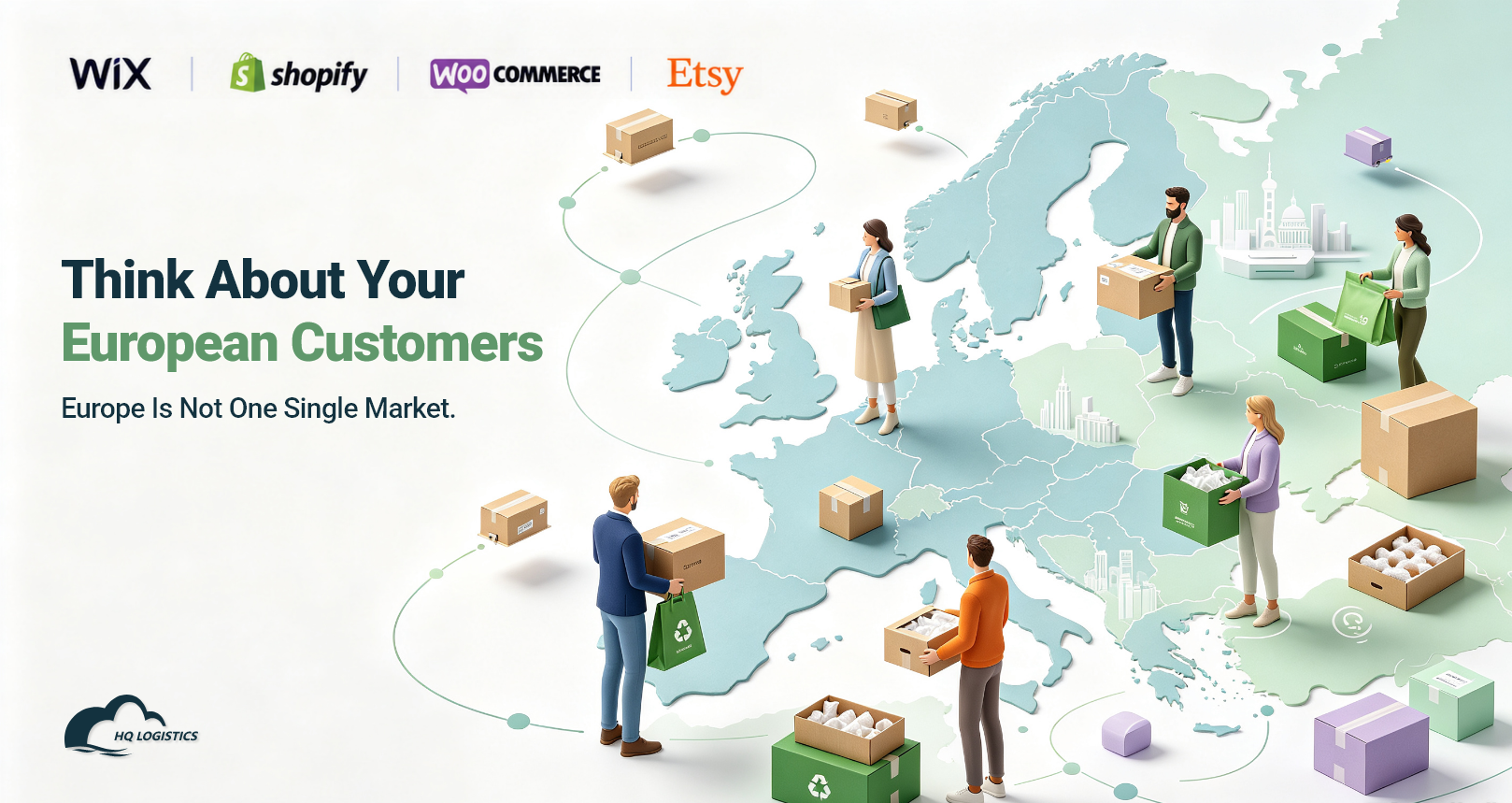
4. Think About Your European Customers
Europe is not one single market.
Your customers may be located in Germany, France, Italy, Spain, the Netherlands, or other EU countries, and packaging expectations can vary between markets.
Customers may also have different recycling systems and disposal habits.
For this reason, Shopify brands selling across Europe should avoid assuming that one packaging solution automatically works perfectly for every market.
Consider:
Target Countries | Local Recycling Systems | Customer Expectations | Packaging Information | Product Requirements
If you sell across multiple European countries, simple and clear packaging information can help customers understand how to dispose of packaging appropriately.
Brands should also make sure any environmental claims they make about packaging are accurate and supportable.
5. Custom Packaging Can Strengthen Your Brand
Eco packaging does not have to look generic.
Growing Shopify brands can combine sustainable materials with custom branding.
For example:
Branded Boxes | Custom Mailers | Printed Tissue Paper | Product Inserts | Thank-You Cards | Custom Stickers | Branded Labels
This allows a brand to create a recognizable experience without relying on excessive decorative materials.
A simple kraft box with a clean logo and a well-designed insert can create a strong brand experience.
For ecommerce businesses, the objective is not to make packaging complicated.
It is to make it recognizable and consistent.
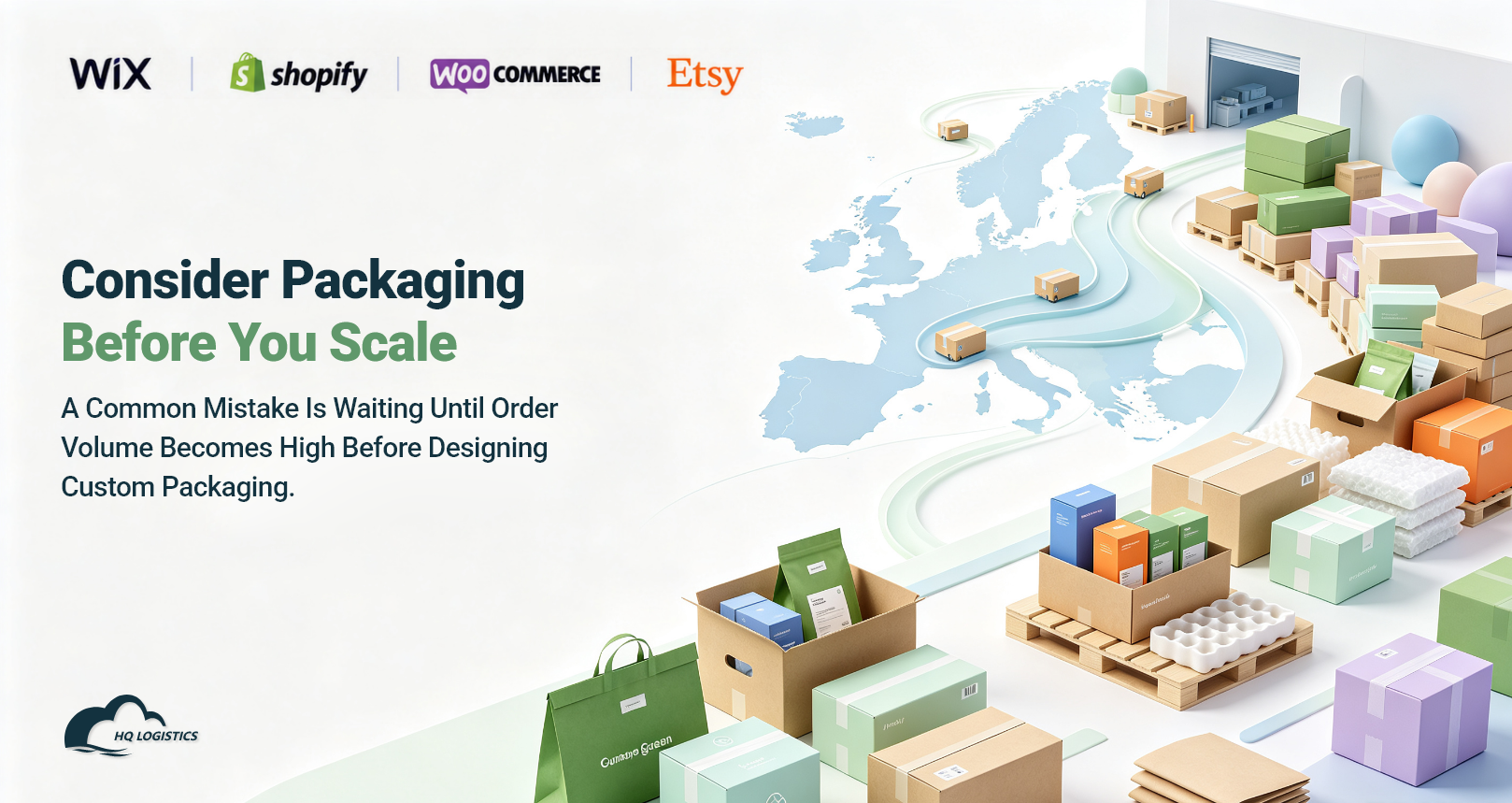
6. Consider Packaging Before You Scale
A common mistake is waiting until order volume becomes high before designing custom packaging.
At low volume, standard packaging may be perfectly practical.
But as your Shopify store grows, changing packaging frequently can create additional costs and operational complexity.
Imagine shipping 20 orders a day with standard packaging.
Then your store grows to 500 orders a day.
Suddenly, you need large quantities of packaging materials, clear warehouse instructions, dedicated storage space, and a repeatable packing process.
It is much easier to prepare the packaging strategy before volume reaches that level.
Start With Samples
Before placing a large packaging order, test samples.
Check:
Appearance | Size | Durability | Product Fit | Printing Quality | Protection | Packing Speed
Then test the package through the actual fulfillment process.
This can reveal problems that may not be obvious when looking at the packaging sample alone.
7. Packaging Should Work With Your Fulfillment Process
Custom packaging is most effective when it is integrated into fulfillment.
A fulfillment center should know:
Which SKU uses which package | How the product should be packed | Which inserts should be included | Where packaging materials are stored | Which packaging version is currently active
Without clear instructions, custom packaging can create more work instead of improving the process.
For growing Shopify brands, packaging should therefore be treated as part of the fulfillment workflow.
A typical process can look like:
Inventory Received → Quality Check → Packaging Materials Prepared → Product Picked → Custom Packaging Applied → Final Check → Shipping
This helps connect brand presentation with operational efficiency.
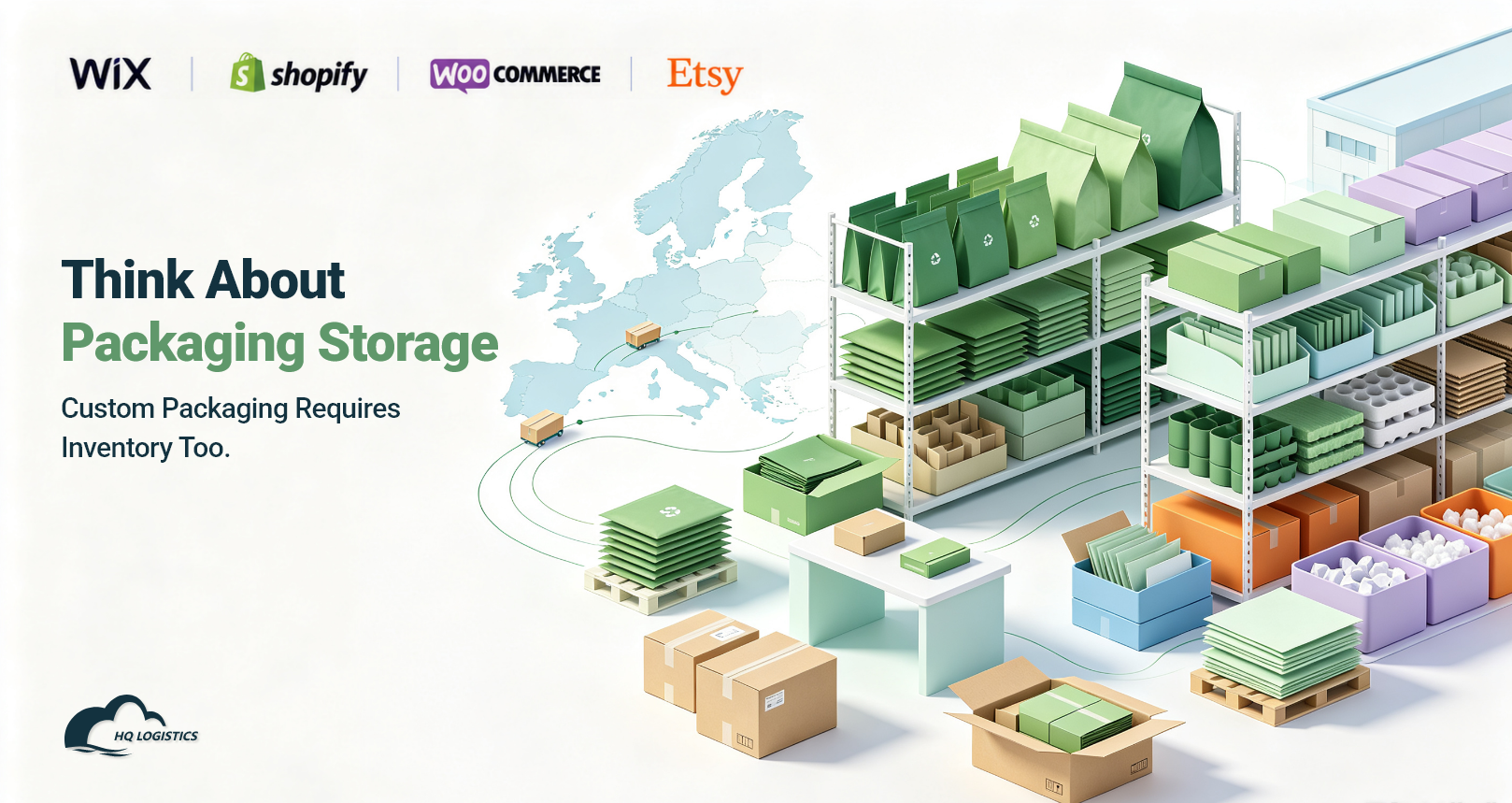
8. Think About Packaging Storage
Custom packaging requires inventory too.
If you order thousands of branded boxes, mailers, inserts, or labels, your fulfillment center needs space to store them.
This becomes more important as your product range expands.
For example, a brand with 20 SKUs may use several packaging formats.
If each product requires different materials, packaging inventory can quickly become complicated.
A fulfillment partner can help organize packaging materials alongside product inventory.
This makes it easier to replenish packaging before it becomes a fulfillment bottleneck.
9. Don't Ignore Packaging Costs
Sustainable packaging can sometimes cost more than standard packaging.
That does not automatically mean it is a poor investment.
The correct comparison should consider the total cost.
Look at:
Packaging Cost | Shipping Volume | Product Damage | Return Rate | Storage Space | Packing Labor | Customer Experience
For example, a slightly more expensive package may reduce dimensional volume or improve product protection.
Another packaging solution may cost less per unit but require more warehouse labor.
Growing brands should therefore evaluate packaging based on its impact on the entire fulfillment process rather than simply comparing the material price.
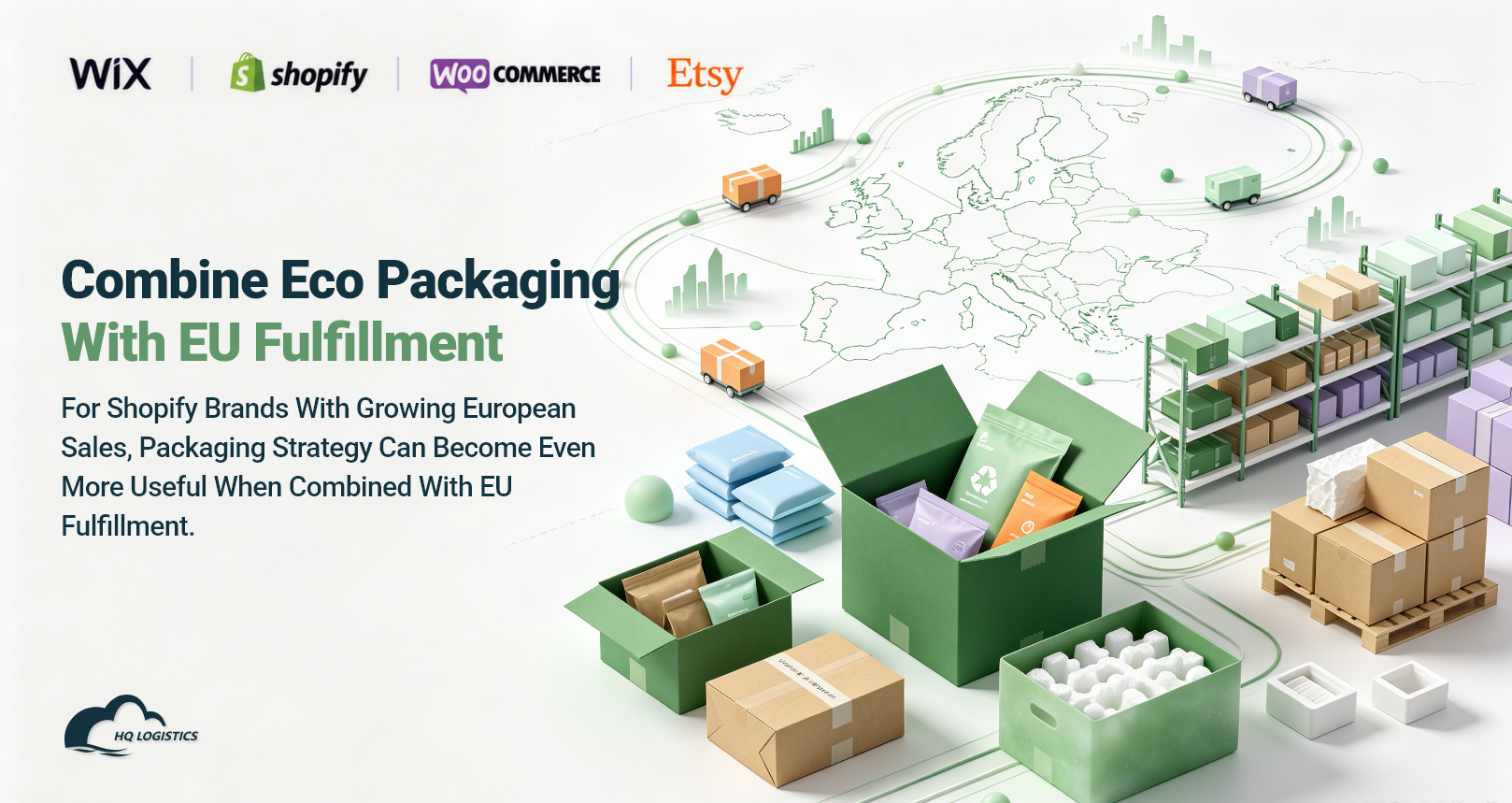
10. Combine Eco Packaging With EU Fulfillment
For Shopify brands with growing European sales, packaging strategy can become even more useful when combined with EU fulfillment.
Instead of preparing every order individually from China, brands can store inventory and packaging materials closer to European customers when the business model makes sense.
A potential workflow could be:
China Sourcing → Production → Quality Inspection → EU Warehouse → Local Fulfillment → European Customer
This can help brands create a more consistent packaging and fulfillment process for their European orders.
An EU warehouse can also make it easier to standardize packaging instructions for orders going to different EU markets.
The specific warehouse strategy should depend on your sales distribution, inventory turnover, product characteristics, and overall fulfillment costs.
11. Avoid Greenwashing
Sustainability claims should be handled carefully.
Words such as “eco-friendly,” “green,” “sustainable,” “biodegradable,” and “compostable” can have specific implications depending on how they are used.
A brand should not make broad environmental claims without understanding what the packaging actually contains, how it is produced, and how customers can dispose of it.
Instead of making vague claims, brands can communicate specific characteristics.
For example:
Made With Recycled Material | Recyclable Paper Packaging | Reduced Packaging Material
Only use a claim when you can support it with reliable information from your packaging supplier or other appropriate documentation.
This creates clearer communication with customers and reduces the risk of misleading environmental messaging.
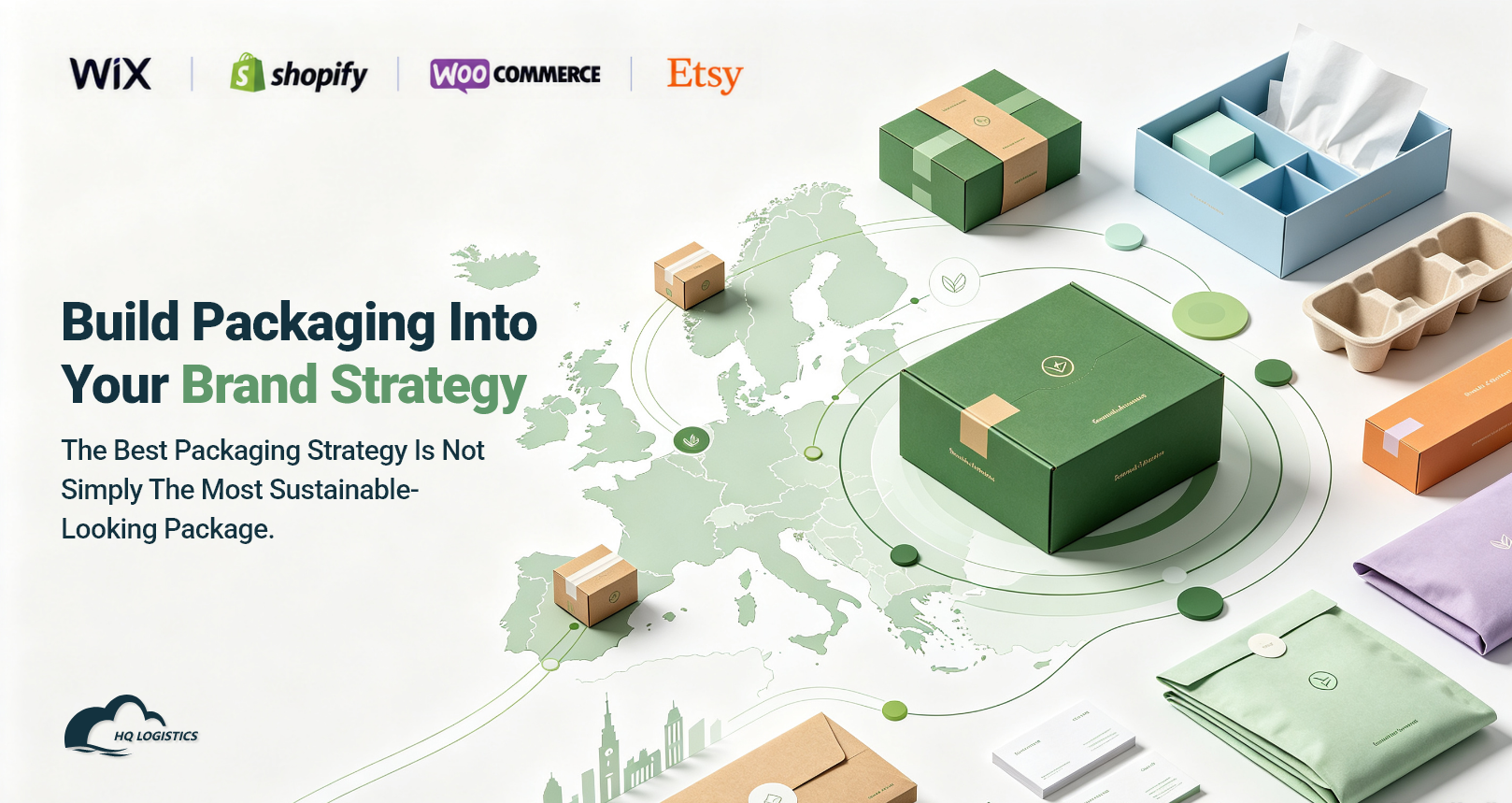
12. Build Packaging Into Your Brand Strategy
The best packaging strategy is not simply the most sustainable-looking package.
It should fit your brand.
A premium beauty brand may need a different packaging experience from a pet accessories brand.
A baby product brand may prioritize protection and simple materials.
A small electronics brand may need additional protection against impact.
Think about:
Who Is Your Customer? | What Does Your Brand Stand For? | What Does the Product Need? | How Will It Be Shipped? | How Will Customers Dispose of the Packaging?
Your answers can guide the packaging design.
How HQ Supports Custom Eco Packaging in Europe
For growing ecommerce brands, custom packaging works best when it is connected to sourcing, warehousing, and fulfillment.
HQ can support brands with:
Product Sourcing | Supplier Coordination | Quality Inspection | Custom Packaging | Warehouse Storage | Order Fulfillment | International Shipping
For brands selling in Europe, HQ can also support eco-friendly packaging solutions
based on product requirements and brand needs.The process can start with packaging samples and product testing before moving to larger-scale packaging production.
Once packaging is ready, it can be coordinated with the fulfillment workflow so warehouse teams know how each product should be packed.
This helps brands maintain a consistent customer experience as order volume grows.
A Practical Eco Packaging Workflow for Shopify Brands
If you are planning custom packaging for your European Shopify store, start with a simple process:
1. Review Your Products
Identify which products need protection, padding, moisture resistance, or special packaging.2. Define Your Brand Style
Choose your colors, logo placement, packaging format, and customer experience.3. Select Materials
Compare recycled, recyclable, kraft, paper-based, compostable, or other suitable options.4. Request Samples
Test packaging quality, size, durability, and appearance.5. Test Fulfillment
Make sure warehouse teams can pack orders efficiently and consistently.6. Check Packaging Claims
Make sure environmental claims are accurate and supportable.7. Plan Packaging Inventory
Estimate usage and storage requirements based on expected order volume.8. Scale Gradually
Start with proven packaging formats and expand as your product range and sales grow.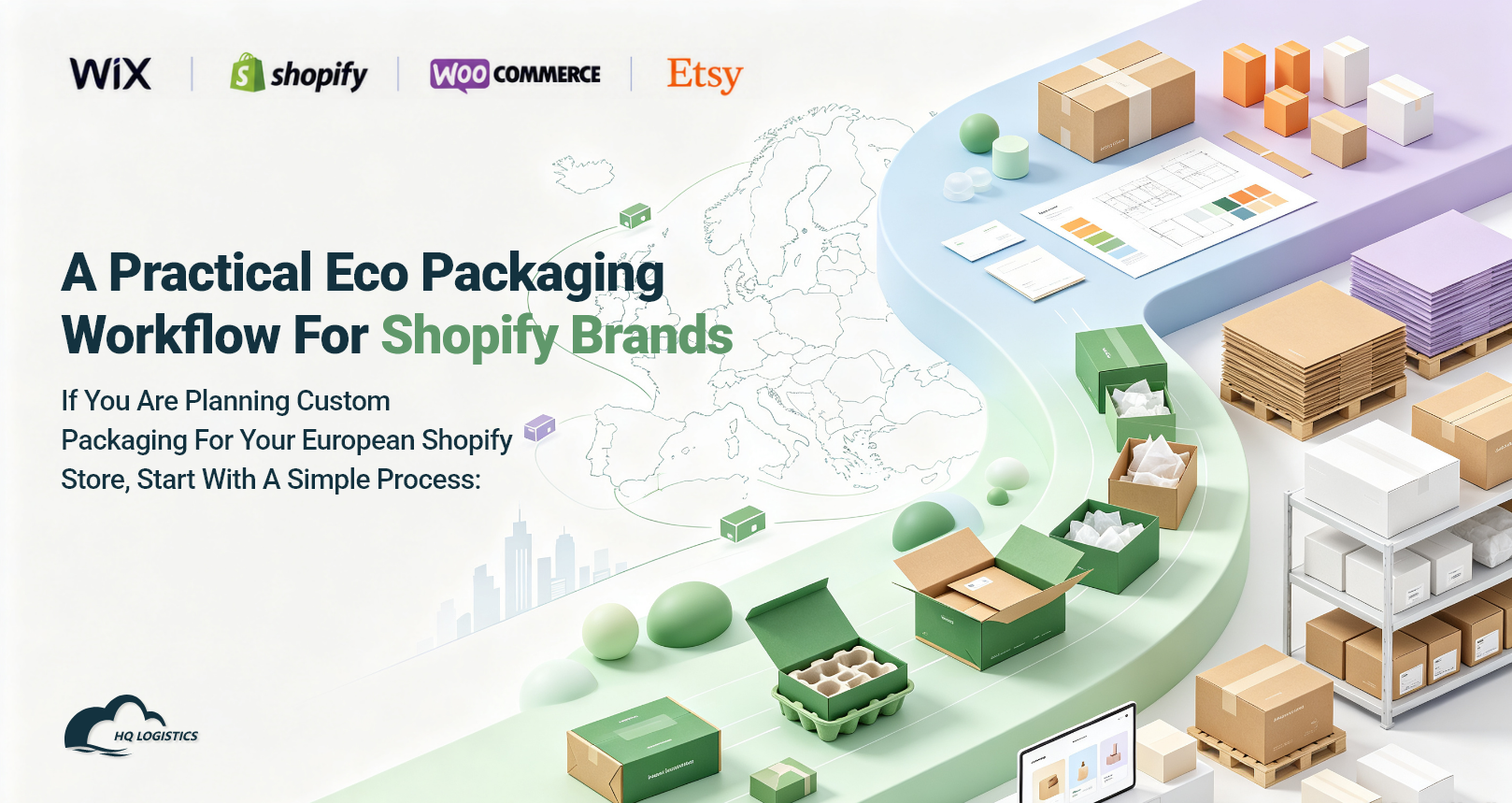
Final Thoughts
For growing Shopify brands, custom eco packaging in Europe is more than a design decision.
It connects branding, product protection, fulfillment, customer experience, and sustainability.
The right packaging should protect the product, fit the brand, work efficiently in the warehouse, and avoid unnecessary material use.
As your European sales grow, consider designing your packaging strategy together with your fulfillment strategy.
Better packaging. Smarter fulfillment. A stronger brand experience.
FAQs
1. What is eco-friendly packaging for ecommerce?
Eco-friendly ecommerce packaging generally refers to packaging designed to reduce environmental impact through factors such as material selection, recyclability, recycled content, reduced material use, or reusable design. The appropriate solution depends on the product and market.
2. Can Shopify brands customize eco-friendly packaging?
Yes. Shopify brands can customize boxes, mailers, inserts, labels, tissue paper, and other packaging elements. Packaging materials should be selected based on product protection, brand requirements, fulfillment processes, and applicable market considerations.
3. Is eco packaging more expensive?
It can be, but unit price is only one part of the total cost. Brands should also consider shipping volume, storage, packing labor, product damage, returns, and customer experience.
4. Can custom packaging be stored in an EU warehouse?
Yes, depending on the warehouse and available storage services. Brands can coordinate product inventory and packaging materials so orders can be packed consistently within the fulfillment workflow.
5. How can I reduce packaging waste?
Start by right-sizing packages, reducing unnecessary layers, choosing appropriate materials, minimizing excessive fillers, and designing packaging around the actual product dimensions.
6. What should I check before ordering custom packaging?
Check material specifications, package dimensions, durability, printing quality, product fit, protection, recycling or disposal information, minimum order quantity, production lead time, and total fulfillment impact.